
ريكفري in Dubai: What Recovery Means and How to Choose the Right Service
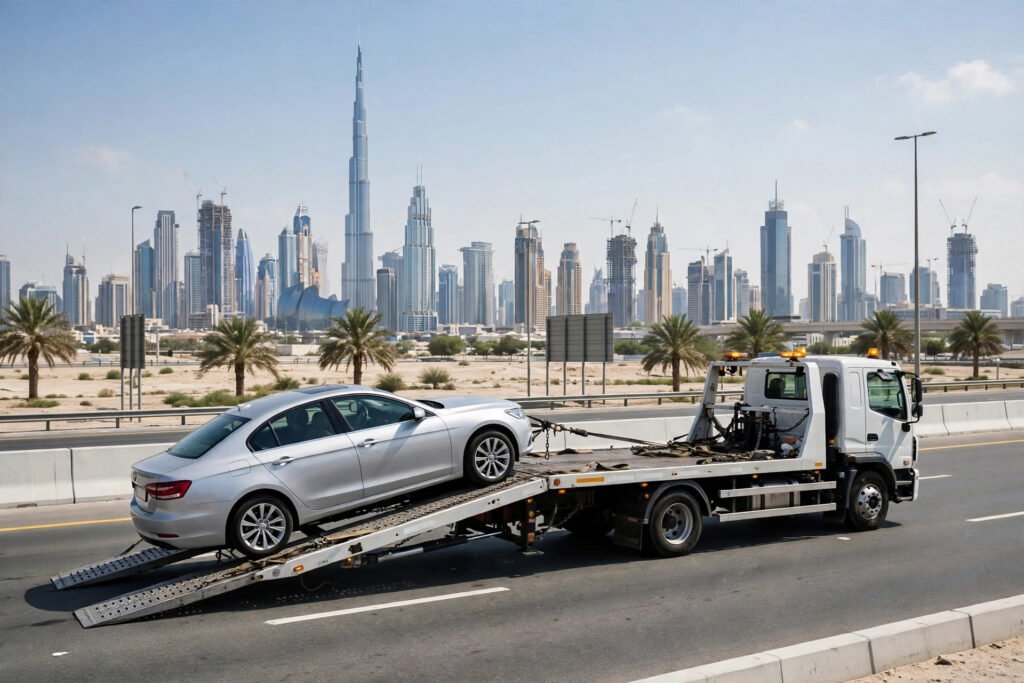
If your car stops on a Dubai road and you search for ريكفري, you are looking for vehicle recovery — a truck that comes to you, loads your car safely, and takes it where it needs to go. ريكفري (pronounced “recovery”) is the word Arabic-speaking drivers in the UAE use most for this help, whether the car has broken down, had an accident, or is stuck and cannot move. This guide explains what recovery covers in Dubai, how to choose a reliable service, and what to tell the dispatcher when you call. What Does ريكفري Mean? ريكفري simply means “recovery” — and on Dubai’s roads it means vehicle recovery: getting a car that cannot drive itself to safety. It is not the same as the “recovery” you see for phones and computers (getting lost files back); when drivers in Dubai say ريكفري, they mean a recovery truck and a team that can move their car. People also use the words ونج (winch) and سحب (towing) for the same kind of help, but ريكفري is the broadest term — it covers the whole job, from the call to the drop-off. A recovery service is needed whenever your car cannot be driven safely: the engine will not start, a tyre has burst, the car has overheated, it has been in an accident, or it is stuck in sand or a tight parking spot. In each case the answer is the same — call a recovery service, share your location, and let the truck come to you. What Does Vehicle Recovery in Dubai Cover? A full recovery service in Dubai covers more than just towing. Recovery Dubai, for example, provides nine services across the city, 24 hours a day: Car recovery — your car is loaded onto a flatbed and taken to your home, garage or workshop. See our main car recovery in Dubai page. Car towing — towing for cars that can roll but should not be driven, including flatbed and wheel-lift towing. Accident towing — careful recovery for damaged cars that cannot roll or steer after a collision. Winch-out recovery — pulling out cars stuck in sand, ditches or basement car parks, as explained in our guide to ونج دبي. Motorcycle towing — bikes loaded and secured properly, not dragged or balanced on a car truck. Tyre change — a flat tyre changed at the roadside so you can drive on. Jump starting — a flat battery jump-started where your car stands. On-site repair — small faults fixed at the roadside when that is possible and safe. Fuel assistance — fuel delivered when the tank runs dry. Not every job needs a full recovery. If the problem is a flat battery or an empty tank, the roadside service may be enough and your car can drive away. If the car cannot move safely, recovery is the right call — do not risk driving it further. How to Choose a Reliable Recovery Service in Dubai When you search ريكفري in Dubai you will find many numbers. Before you call one, check these points — they separate a reliable service from a risky one: Available 24/7. Breakdowns do not keep office hours. A service that answers at night, on weekends and on public holidays is the one you want saved in your phone. Price confirmed before dispatch. The exact price should be agreed on the call, before the truck moves. If a service will not give you a price until the truck arrives, be careful. The right truck for your car. A flatbed suits most cars, especially low, luxury or all-wheel-drive cars that should not be dragged. Ask what truck is coming if your car is lowered, a 4×4 or a bike. Coverage where you are. Make sure the service covers your area — Downtown, Marina, JLT, Al Barsha, Al Quoz, Deira or wherever you are standing — and your destination, whether that is home or a garage. A real number you can call and WhatsApp. A working phone number and WhatsApp mean you can share your live location pin, photos of the car, and the garage name without confusion. Clear about what happens next. A good dispatcher tells you what to do while you wait, what the truck will do when it arrives, and where your car will go. Save the number of a service you trust before you need it. Searching for ريكفري at the roadside, in the heat, with a dead phone battery is the worst time to compare options. What to Tell the Dispatcher When You Call The faster the dispatcher understands your situation, the faster the right truck reaches you. On the call, give these five details: Your exact location — share a live location pin on WhatsApp, plus the road name, nearest landmark, building or tower name, and car park level if you are underground. Your car — make, model and colour, so the driver can spot you and bring the right equipment. What happened — the car will not start, the tyre burst, it overheated, it was in an accident, or it is stuck in sand. Say plainly what you can see and hear. Whether the car can roll or steer — this decides whether a standard loading or a winch-out is needed. Where the car should go — your home, a named garage or workshop, or the dealer. Give the full name and area, not just “the garage”. If you can, send a photo of the car and its surroundings on WhatsApp. It helps the dispatcher judge the job before the truck leaves, so the truck arrives with the right setup the first time. What Happens After You Call for ريكفري For a first-time caller, the process is simple. First, you agree the price on the call — nothing moves until you have. Then the truck is dispatched to your location pin. When it arrives, the driver checks the car, loads it onto the flatbed (winching it out first if it is stuck), and
Winch in Dubai (ونج دبي): How Stuck Cars Are Pulled Out Safely
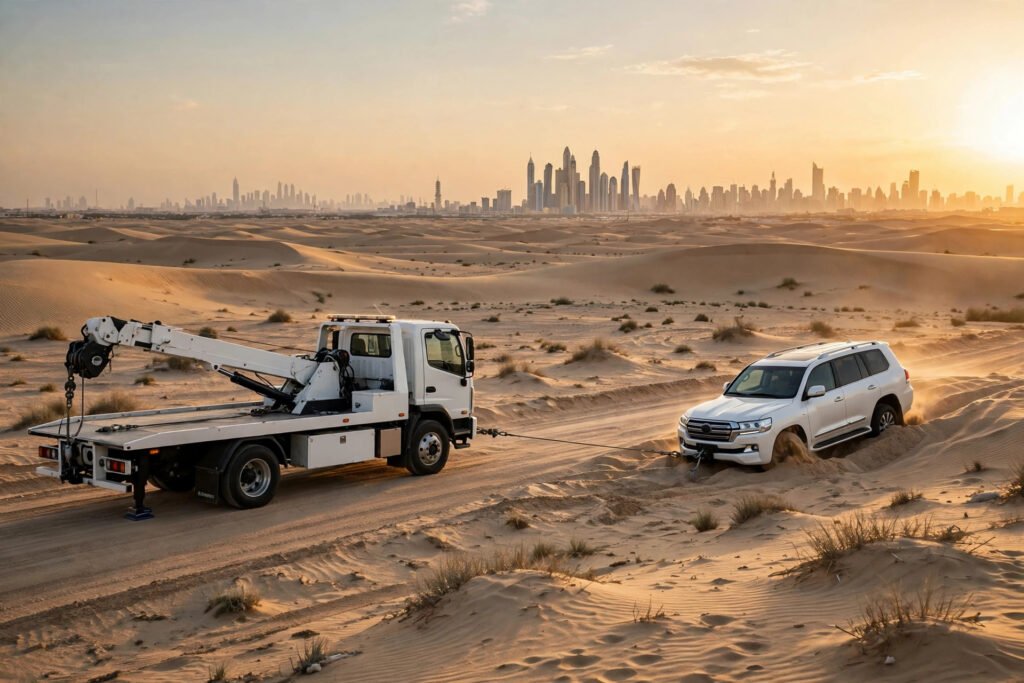
If your car is stuck and cannot move, searching for ونج دبي — “winch Dubai” — is how most drivers in the Emirates ask for help. ونج (winch) is the everyday Gulf word for the recovery truck and its pulling gear: the machine that drags a stuck car back onto solid ground so it can be loaded and moved. This guide explains what a winch-out actually involves, when you need one, and how the job is done safely in Dubai. What Does ونج (Winch) Mean in Dubai? In the UAE, drivers use ونج and ريكفري almost interchangeably when they call for help. Strictly speaking, the winch is the motorised drum and steel cable fitted to the recovery truck. That cable is what pulls a car out of sand, mud, a ditch or a tight parking spot when the car cannot be driven or pushed free. The flatbed then carries the car to its destination. So when you book a winch-out in Dubai, you are booking both steps: the pull-out, and the transport that follows. When Do You Need a Winch in Dubai? A normal tow cannot start until the car is somewhere the truck can load it. A winch is needed whenever the car is stuck somewhere it cannot roll out of on its own: Stuck in sand — desert edges, unpaved shoulders and beachside tracks around Dubai catch out saloon cars and even 4x4s on road tyres. Basement car parks — a car that will not start or has a locked steering wheel deep inside a tower car park often has to be winched to the ramp or entrance before it can be loaded. Ditches, kerbs and soft ground — a wheel dropped off the edge of the road, or a car bellied on soft ground after rain, needs a controlled pull rather than a push. After an accident — a damaged car with a bent wheel or locked transmission cannot roll; the winch drags it carefully onto the flatbed. This is part of our accident towing work. Tight or awkward positions — cars parked nose-in against a wall, or blocked in so the flatbed cannot line up, are winched sideways or backwards into a loadable position. How a Winch-Out Works, Step by Step Step 1: You describe the situation on the call Call +971 50 668 1183 and tell us where the car is, what it is stuck in or against, and where it needs to go. A photo on WhatsApp helps us judge the angle and ground. The exact price is confirmed on the call before dispatch — we do not move until you agree to it. Step 2: The truck positions and anchors The recovery truck parks on firm ground facing the stuck car, keeping the pull as straight as possible. A straight pull is a safe pull: the cable, the car and the truck stay in one line so the car tracks out of its hole instead of twisting. Step 3: The cable is attached to a proper towing point The winch cable is fixed to the car’s towing eye or another strong point made for pulling — never to a bumper, spoiler or suspension part that would tear off. For cars with no accessible towing eye, straps are placed around a suitable strong point instead. Step 4: The car is pulled out slowly The winch draws the car out at walking pace while the driver steers if the wheels still turn. Slow is deliberate: it keeps the car stable, avoids digging it deeper, and lets the operator stop instantly if the car starts to swing or a strap slips. Step 5: The car is loaded onto the flatbed Once the car is on solid ground, the same winch loads it up the flatbed ramp — this is how every flatbed loading works, stuck or not. The car is then secured with wheel straps for the journey, the same process we use for every car recovery in Dubai. Winch-Out vs Standard Towing: What Is the Difference? Standard towing assumes your car can roll to the truck and up the ramp under guidance. A winch-out is the extra step before that, for cars that cannot move at all — buried wheels, locked steering, accident damage, or no space to manoeuvre. If your car simply broke down on a clear road, you probably do not need a winch-out; if it is stuck, wedged or buried, you do. Not sure which you have? Describe the situation on the call and we will send the right setup the first time. Staying Safe While the Winch Works Stand well clear of the cable’s line — a working winch cable is under heavy tension. Keep children and passengers away from the car being pulled. Do not try to push the car while the winch is pulling; let the machine do the work. If you are stuck in sand, stop spinning the wheels — it digs the car deeper and makes the pull harder. On a road, switch on your hazard lights and use your warning triangle if you have one. What Does a Winch-Out Cost in Dubai? The price depends on where the car is, how stuck it is, and where it needs to be taken afterwards. Rather than guess, we confirm the exact price with you on the call before the truck is dispatched — based on your location, your destination and your car — so there are no surprises when the truck arrives. Book a Winch Anywhere in Dubai, 24/7 Recovery Dubai runs winch-out and flatbed recovery around the clock from Al Quoz, covering the whole city — whether your car is buried in sand at the desert edge, stuck in a JLT basement, or damaged after a shunt. Our main guide to ريكفري سيارات دبي (car recovery Dubai) covers the full recovery service. To book, call or WhatsApp us, or use our contact page. FAQs About ونج دبي (Winch Dubai) What is a ونج in Dubai? ونج
Car Recovery Dubai (ريكفري سيارات دبي): The Complete 24/7 Guide
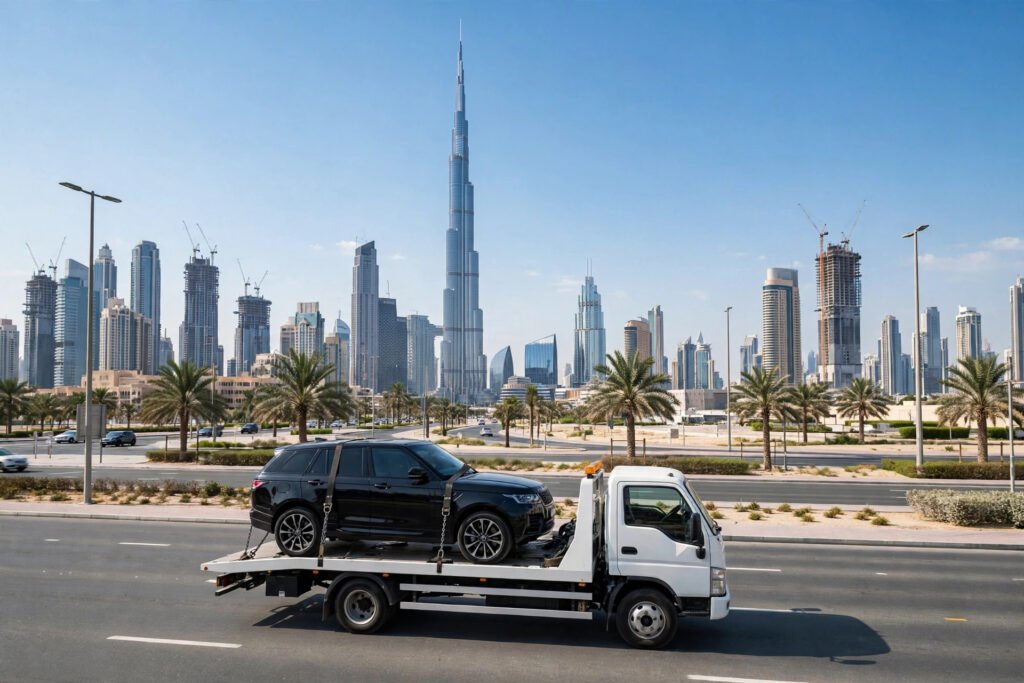
When drivers in Dubai search in Arabic, the term they use is ريكفري سيارات دبي — literally “car recovery Dubai”. It means one thing: a recovery truck that comes to your car, loads it safely, and takes it where it needs to go, at any hour. This guide explains how car recovery in Dubai works, what happens from your first call to drop-off, and how to get the right truck sent to you first time. What Does ريكفري سيارات دبي Mean? ريكفري (recovery) is the everyday word used across the Emirates for vehicle recovery, and ريكفري دبي is the same search with the city named. Whether you search in Arabic or English, you are looking for the same service: a flatbed recovery truck, a trained operator, and safe transport for a car that cannot or should not be driven. Recovery Dubai works with flatbed trucks only, because a flatbed carries the whole car — no wheels dragging on the road — which is the safest method for modern cars, SUVs, sports cars and motorcycles alike. When Do You Need Car Recovery in Dubai? Breakdown — the engine will not start, a warning light says stop, or the car loses power on Sheikh Zayed Road or a local street. After an accident — the car is damaged and must not be driven; see our accident towing page for how those jobs are handled. Stuck car — buried in sand, wedged in a basement car park, or blocked in so it cannot move. Flat tyre or dead battery with no spare — sometimes a roadside fix is enough; if not, the car is recovered to a workshop. Moving a car that cannot be driven — an unregistered car, a project car, or a luxury car you do not want driven across the city. How Car Recovery Works, Step by Step Step 1: Call or WhatsApp with your location Call +971 50 668 1183 and share your location pin, your car model, what has happened, and where the car needs to go. The exact price is confirmed on the call before dispatch — we do not move until you agree to it. Step 2: The right truck is dispatched From our base in Al Quoz, the flatbed is sent to your pin anywhere in Dubai. Tell us about tight access — basement levels, narrow streets, gated communities — so the driver plans the approach before setting off. Step 3: Your car is loaded onto the flatbed The operator lowers the bed, winches or drives the car up, and secures it with wheel straps. Low and luxury cars are loaded at a shallow angle so nothing scrapes. This is the standard method behind every car towing and recovery job we run. Step 4: Transport and drop-off Your car is carried — never dragged — to your workshop, home, or destination of choice, and unloaded the same careful way. You can ride along or track the job by phone, whichever suits you. Which Recovery Service Do You Need? Recovery is the umbrella; the right service depends on the situation: Car recovery — the general service for breakdowns and non-runners. Car towing — moving a car from A to B on the flatbed. Accident towing — for damaged cars after a collision. Jump starting — a dead battery fixed at the roadside where possible. Motorcycle towing — bikes and scooters secured on the flatbed with bike-specific straps. Not sure which fits? Describe the situation on the call and we will send the right setup — the full list is on our vehicle recovery page. ريكفري Numbers: How to Reach Recovery in Dubai Drivers also search ارقام ريكفري دبي — “recovery Dubai numbers” — because when a car stops, the phone number is the whole job. Ours is simple: +971 50 668 1183, answered 24 hours a day, 7 days a week, including nights and holidays — the same round-the-clock cover described in our 24-hour recovery guide. Save the number in your phone before you ever need it; a breakdown is the worst time to go searching. Areas We Cover Across Dubai Recovery runs city-wide from Al Quoz: Downtown, Business Bay, JLT, Dubai Marina, Jumeirah, Al Barsha, and every community in between. Our guide to car recovery in Downtown, Marina and JLT explains what to tell the dispatcher in the busiest areas — tower name, car park level and the nearest landmark make the pickup faster and smoother. What Does Car Recovery Cost in Dubai? It depends on where the car is, where it is going, and what vehicle it is. Instead of publishing a price that may not match your job, we confirm the exact price on the call before the truck leaves — based on your location, destination and car — so the figure you agree to is the figure you pay. FAQs About ريكفري سيارات دبي (Car Recovery Dubai) What is the difference between ريكفري and ونج in Dubai? In everyday use in the Emirates, ونج refers to the tow truck and its winch, while ريكفري means the full recovery service — loading the car onto a flatbed and transporting it. In practice, asking for either brings a recovery truck; we work with flatbeds because they are the safest option for every car. Is car recovery in Dubai available at night and on weekends? Yes — the service runs 24 hours a day, 7 days a week, including nights and holidays. Call +971 50 668 1183 at any time. Do you move luxury and low cars without damage? Yes. Low and luxury cars are loaded onto the flatbed at a suitable angle and secured with dedicated straps — never dragged along the ground and never touched on the bodywork with metal tools. My car is stuck in a basement car park. Can the truck reach it? In many cases, yes — or the car is first brought to the car park entrance and loaded there. When you call, give the tower name and
Car Recovery in Dubai’s Busiest Areas: Downtown, Marina & JLT
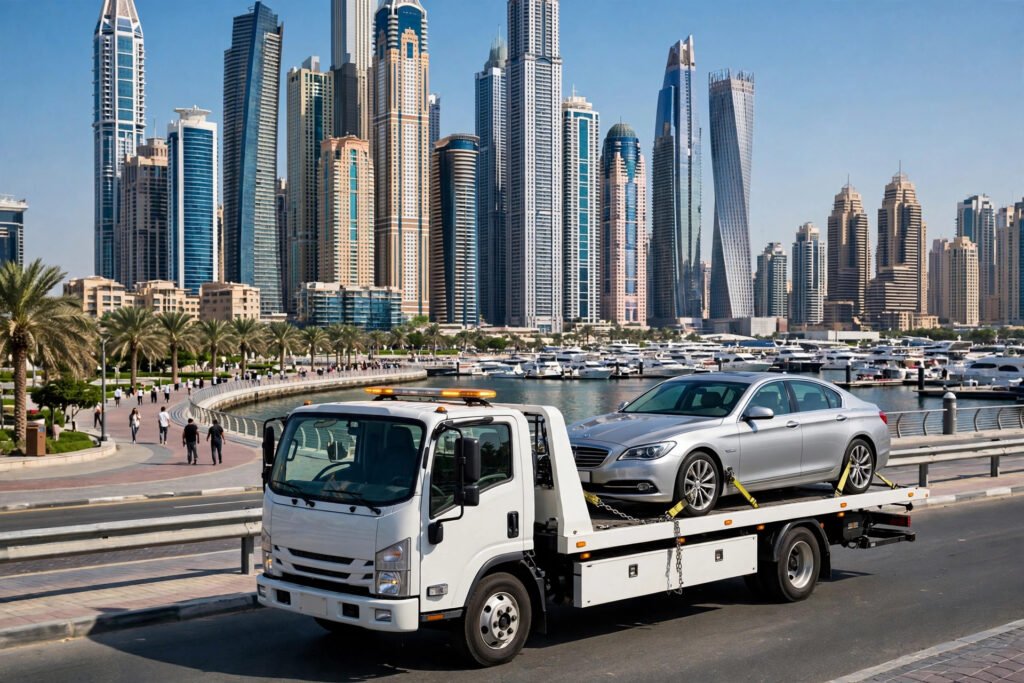
Car recovery dubai near me is the search people type when their car stops in the middle of Dubai’s busiest places — outside Dubai Mall in Downtown, on Marina Walk, or in a JLT tower car park — and they need help where they actually are, not a general promise. This guide explains how car recovery works in Downtown Dubai, Dubai Marina and Jumeirah Lake Towers (JLT), what makes each area different, what to tell the dispatcher so the truck finds you the first time, and where to wait safely while it is on its way. Recovery Dubai provides recovery across Dubai, 24/7, including Downtown, Marina and JLT. When you call +971 50 668 1183, tell the dispatcher the area, the building or tower name, and what happened to your car, and the exact price is confirmed with you on the call before any truck is dispatched. Our car recovery page explains the full process, from the call to the drop-off. Why Recovery Is Different in the Busiest Areas Downtown, Marina and JLT are the three places in Dubai where a breakdown is most likely to happen in a difficult spot. All three are dense: tall towers, multi-level car parks, basement parking, narrow service roads, and streets that are busy for most of the day. A car that stops on an open road in a quiet neighbourhood is a simple job — the truck pulls up beside it, loads it, and leaves. A car that stops in a basement car park under a JLT tower, or on a crowded street outside Dubai Mall, needs more planning before the truck even sets off. The first difference is access. A recovery truck is a large vehicle, and it cannot go everywhere a car can go. Basement car parks have height limits, tight ramps and low ceilings. Some tower drop-offs are too narrow for a flatbed to turn around in. Some streets in the Marina are one-way, or closed to larger vehicles at certain times. The dispatcher asks about the exact spot for this reason — the answer decides whether the truck can come straight to the car, or whether the car needs to be moved to a place the truck can reach first. The second difference is the wait. In a quiet area you can usually stand beside your car and wait. In Downtown or the Marina, the safe place to wait may not be beside the car at all — it may be on the pavement, inside the building lobby, or behind a barrier away from moving traffic. Knowing where to wait, and telling the dispatcher where you will be, is part of the job, and this guide covers it area by area below. Car Recovery in Downtown Dubai Downtown Dubai is built around the Burj Khalifa and Dubai Mall, and it is the busiest part of the city for most of the day. The roads around the Mall, the Boulevard, and the towers are full of cars, taxis and delivery vehicles, and the car parks — the Mall’s own parking, the tower basements, and the open parking areas — are large and easy to get lost in. If your car stops here, the single most useful thing you can do is pin down exactly where it is before you call. When you call from Downtown, tell the dispatcher the building or place name first: Dubai Mall, the tower name, the hotel name, or the street name. Then the parking detail: which car park, which level, and which section or bay number if you can see one. A flatbed cannot always reach a car parked deep inside a basement level, and the driver needs to know that before he sets off — he may ask you to meet him at the car park entrance, or to move the car to the ground level if it can still be driven or pushed safely. If the car will not move at all, say so, so the driver brings the right equipment for a car that has to be winched out of a tight space. While you wait in Downtown, stay out of the flow of traffic. If you are on a road, move to the pavement or behind a barrier. If you are in a car park, wait where the driver can see you and where cars are not reversing — near a pillar, by the lift lobby, or at the entrance the driver will use. Share your location pin on WhatsApp if you can: in a place as large as Dubai Mall’s parking, a pin is far more reliable than a description, and it is the fastest way for the driver to find your car among hundreds of others. Our location page for car recovery in Al Wasl covers the roads that run through this part of the city, and car recovery in Zabeel covers the area beside Downtown. Downtown is also where luxury and sports cars are most common, and that matters for how the car is loaded. A low car needs a flatbed and a shallow loading angle, so a low front end does not catch on the ramp — our guide to vehicle recovery for every vehicle explains how a low car is handled. If your car is lowered, or if it is a four-wheel-drive car, tell the dispatcher when you call, so the right truck is sent the first time. Car Recovery in Dubai Marina Dubai Marina is a different kind of busy. The towers are tall, the streets are narrow, and much of the area is built around the Marina Walk and the water. Cars stop here on the Marina’s roads, in tower car parks, and in the parking areas around Jumeirah Beach Residence (JBR). The challenge is usually the same as in Downtown — access — but the shape of it is different: tight turns, one-way streets, and drop-off areas that are fine for a car but too tight for a flatbed to turn in.
Vehicle Recovery in Dubai for Every Vehicle: SUVs, 4x4s, Luxury Cars & Bikes
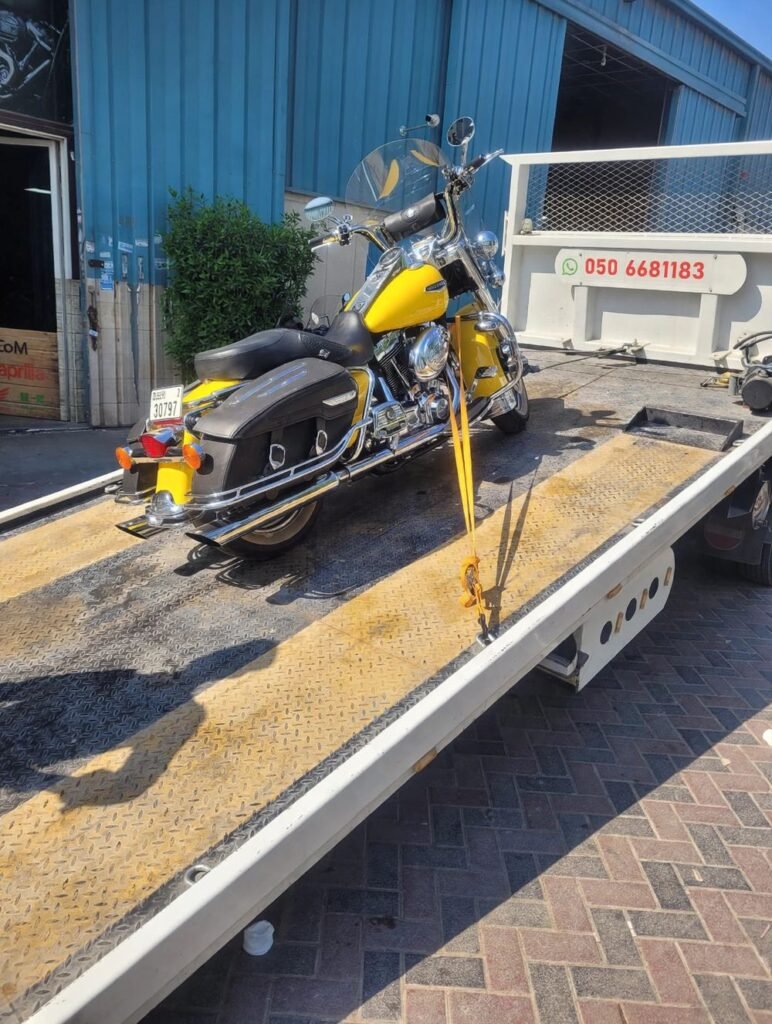
Vehicle recovery dubai is not one job done the same way every time. A family SUV, a 4×4 stuck in the sand, a low luxury car, and a motorcycle all need different equipment, different loading, and different care — and sending the wrong truck can waste time or damage the vehicle. This guide explains how recovery changes with the vehicle you drive, what the recovery team will ask you, and what happens when the truck arrives, so you know what to expect whatever you are driving in Dubai. Recovery Dubai provides recovery across Dubai, 24/7, for cars, SUVs, 4x4s, luxury cars, motorcycles, vans and pickups. When you call +971 50 668 1183, tell the dispatcher what vehicle you have, where it is, and what happened to it, and the exact price is confirmed with you on the call before any truck is dispatched. Our car recovery page explains the full process, from the call to the drop-off. Why One Truck Does Not Fit Every Vehicle Every vehicle is different in the ways that matter to a recovery driver: how heavy it is, how high or low it sits, whether all four wheels drive it, and how much it is worth. A flatbed that suits a small hatchback may not suit a long luxury car with a low front end, and a wheel-lift that works for a light car is not the right choice for a heavy 4×4 with a broken axle. The dispatcher asks about your vehicle for a reason — the answer decides which truck is sent, what equipment goes on it, and how the vehicle will be loaded and secured. The other thing that changes with the vehicle is what can go wrong while it is being moved. A car that still rolls and steers is loaded very differently from one whose wheels will not turn, and a vehicle with four-wheel drive cannot be towed with two wheels on the road in the way a front-wheel-drive car can. That is why the first questions on the call are always about the vehicle itself: what it is, whether it starts, whether it rolls, and whether it steers. The answers shape everything that follows. Vehicle Recovery Dubai for SUVs and Family Cars SUVs are the most common recovery job in Dubai, and in most cases the job is straightforward — but an SUV is heavier and taller than a small car, and that changes the loading. A mid-size SUV usually goes onto a flatbed, where all four wheels are off the road and the vehicle is strapped down for the journey. The bed tilts down, the SUV is driven or winched up onto it, and the driver checks every securing point before setting off. Because the vehicle is higher, the driver also checks the clearance on the bed and the space around it, especially in a tight car park or a narrow residential street. Family cars — the everyday saloons and hatchbacks that carry children to school and their owners to work — are usually the simplest to recover. If the car still rolls and steers, it can be driven or winched onto the flatbed in a few minutes. If it will not start, the problem is often a flat battery, and a jump start may be enough to get it going again without a full recovery. If a tyre has gone flat, a tyre change on the spot may be possible where it is safe to do it. The driver will judge this when he sees the car and the place it is in. What matters most with an SUV or a family car is the destination. Tell the dispatcher whether the car needs to go to a garage, to your home, or to a dealership, and confirm the price on the call before any truck is dispatched. If you are not sure which garage to use, say so — the dispatcher can talk through the options with you. If the situation changes while you wait, call back and say so straight away, so the price and the destination can be confirmed again before the work starts. 4x4s and Off-Road Vehicles A 4×4 is built for rough ground, but that does not make it easy to recover — in some ways it makes the job harder. A 4×4 is heavy, it sits high, and its four-wheel-drive system means it cannot be towed with two wheels on the road. The only safe way to move a 4×4 that cannot be driven is on a flatbed, with all four wheels off the ground. A wheel-lift tow that drags the rear wheels along the road can damage the drivetrain, so a recovery driver will not use it for a 4×4. Many 4×4 recoveries in Dubai happen away from the road altogether — a vehicle stuck in soft sand on the edge of the city, or bogged down after leaving the tarmac. That is a different job from a breakdown on Sheikh Zayed Road, and it needs different equipment: a winch. Our winch-out recovery page explains how a stuck vehicle is pulled free, but the short version is this: the winch cable is attached to a strong point on the vehicle, the truck anchors itself, and the vehicle is pulled slowly and steadily back onto firm ground. It is slow work, and it has to be — a fast pull can damage the vehicle or the winch. If your 4×4 is stuck in sand, do not keep trying to drive it out. Spinning the wheels only digs the vehicle deeper and can damage the tyres and the drivetrain. Switch the engine off, call for help, and share your location pin — a 4×4 stuck in the sand is often far from a road or a landmark, and the pin is the most reliable way for the driver to find you. Tell the dispatcher that the vehicle is off-road and stuck, not just broken down, so the right truck and the winch are
Night Breakdown in Dubai: Staying Safe While Recovery Is on the Way
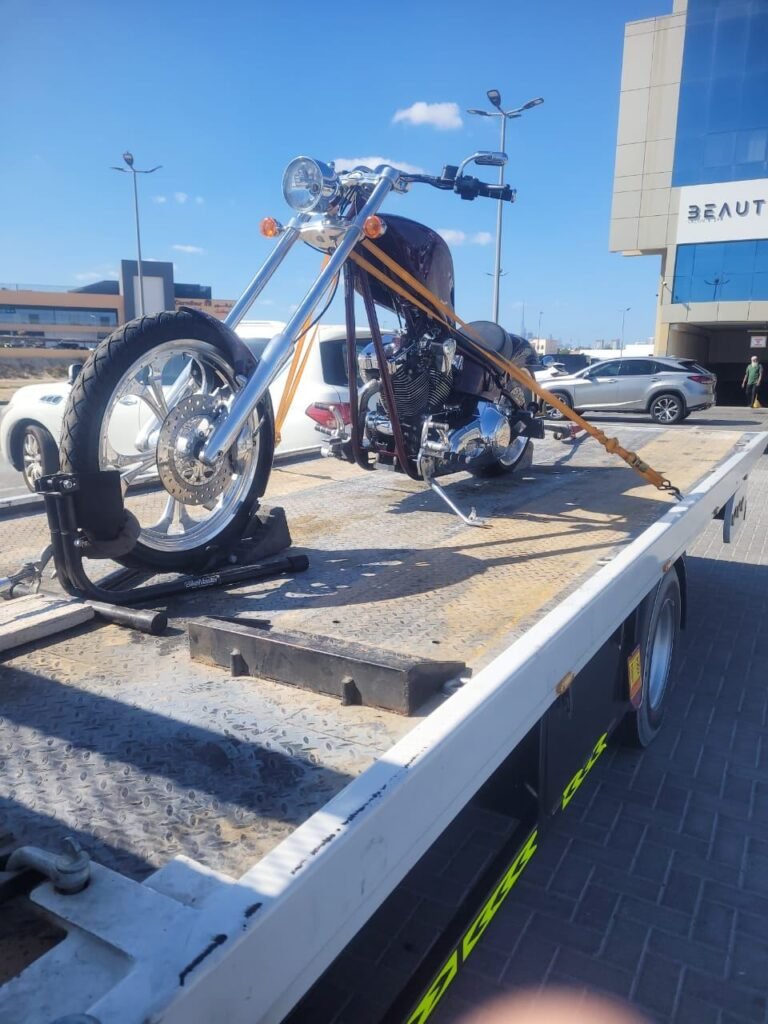
24 hour recovery service near me is the search you make when your car stops in Dubai after dark and you need help now, not in the morning. A night breakdown is different from a daytime one: other drivers cannot see you as easily, landmarks disappear in the dark, and a quiet street can feel very empty at 2 in the morning. This guide explains what to do first, where to wait, and what to tell the dispatcher — so you stay safe and visible while the recovery truck is on its way. Recovery Dubai provides recovery across Dubai, 24/7 — including through the night. When you call +971 50 668 1183, tell the dispatcher that it is dark and where you are, share your location pin on WhatsApp, and the exact price is confirmed with you on the call before any truck is dispatched. You do not have to wait until morning, and you do not have to try to fix the car yourself in the dark. Our car recovery page explains the full recovery process, from the call to the drop-off. First: Make Yourself Visible At night, being seen is your first job — before the phone call, before checking the engine, before anything else. Switch on your hazard lights straight away and keep them on. Your hazard lights are what other drivers see first in the dark, and they are also what the recovery driver will look for when he is trying to find you. If your car still has its headlights, keep those on too, and do not switch the car off if its lights are the only thing marking your position on the road. If you have a reflective vest or a warning triangle in the car and you can reach them without stepping into traffic, use them. A reflective vest makes you visible the moment another driver’s headlights touch it, and a warning triangle placed behind the car gives approaching drivers time to slow down and move over. Only place a triangle if you can do it safely — on a quiet street or in a parking area, yes; on a fast road, only from the safe side and never by walking along a live lane in the dark. Check what is around you before you get out of the car at all. At night it is harder to judge how fast traffic is moving and how close it is. If you are on a busy road or a highway, the safest place may be inside the car with your seatbelt on and your hazard lights on, rather than outside it. If you are on a quiet street or in a parking area, getting out on the safe side — the side away from traffic — is usually the better choice. The rule is simple: at night, never stand where drivers cannot see you. Where to Wait at Night Where you wait depends on where the car stopped, and the right answer changes with the place. On a highway, the rules from our highway guide still apply at night, only more so: if the car can still move, steer onto the hard shoulder, hazards on, and get everyone behind the barrier, away from the traffic. If the car has stopped in a live lane and cannot be moved, stay inside it with your seatbelt on and call for help from inside the car. Do not get out into a live lane at night to push the car or to wave traffic down. Our post on breaking down on Sheikh Zayed Road explains highway breakdowns in full, including the night cases. On a residential street in a community like Al Barsha, Jumeirah, or Al Nahda, the road is usually quieter at night, and the safest place is often on the pavement or in front of a lit building entrance, where you can see the road and the recovery driver can see you. Keep the car’s hazard lights on so the driver can spot it, and keep your phone in your hand so you can answer when he calls. If there is a petrol station, a shop, or a lit area close by and you can reach it without leaving the car alone in an unsafe place, waiting there is fine — just tell the dispatcher where you have moved to, so the driver does not arrive at an empty car. In a car park — a mall car park, a hotel car park, or an underground parking area — the car is usually already out of traffic, which makes the wait easier. Stay with the car or close to it, keep the hazards on if the car park is open-air, and tell the dispatcher the car park name, the level or zone, and the nearest entrance or lift. Underground parking can block your phone signal, so if your calls are not going through, walk to the nearest entrance or ramp where the signal is stronger and call from there. If you are with family, keep everyone together in one place, and keep children with you at all times. On a quieter road on the edge of the city, or a stretch of road with little lighting, the darkness itself is the problem. Stay in or right beside the car, keep the hazard lights on, and do not walk away from the car to look for help, a petrol station, or a lit building. Help comes to you; you do not go looking for it on foot in the dark. A shared location pin is the most reliable way to be found on a road like this, because there may be nothing to describe — no building, no sign, no landmark — for kilometres in either direction. The Night Call: What to Tell the Dispatcher A night call needs the same details as a daytime call, plus one extra piece of information: that it is dark, and what the driver should look for. Tell the
Broken Down on Sheikh Zayed Road? Recovery in Dubai, Highway Edition
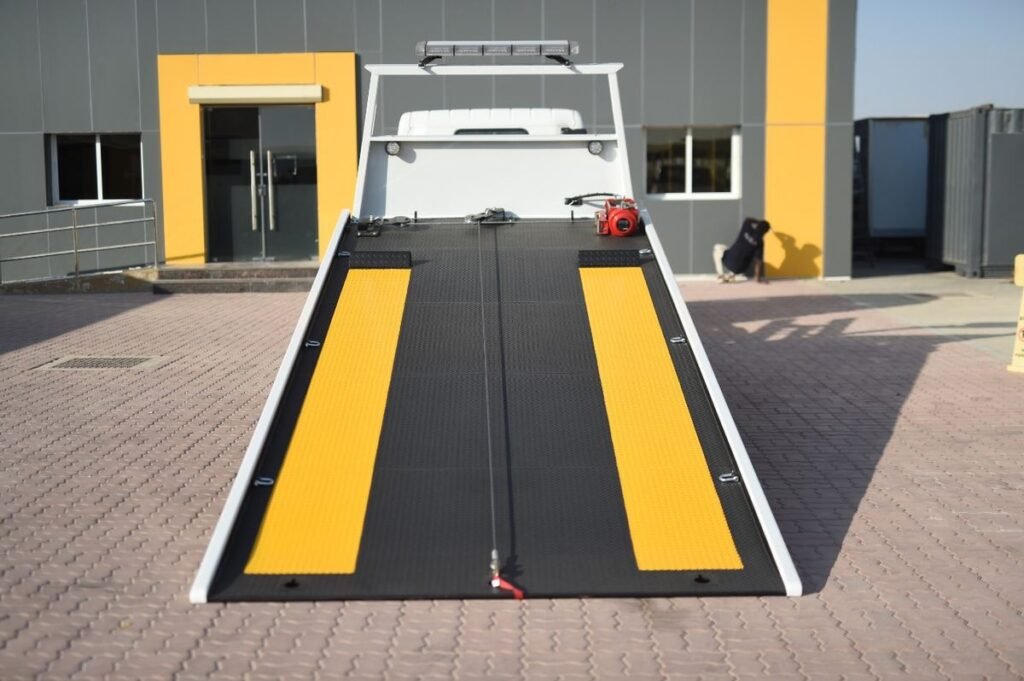
Dubai recovery service help on a highway is different from help on a quiet street. On Sheikh Zayed Road, Emirates Road, or Al Khail Road, traffic moves fast, there is nowhere safe to stand beside your car, and a small problem can become dangerous in minutes. This guide explains what to do first when your car breaks down on a Dubai highway, how a recovery service reaches you there, and what happens from the call to the drop-off — so you stay safe while help is on the way. Recovery Dubai provides recovery across Dubai, 24/7, including the highways. When you call +971 50 668 1183, tell the dispatcher which highway you are on, which direction you are travelling, and the nearest exit, interchange, or landmark — the exact price is confirmed with you on the call before any truck is dispatched. A location pin shared on WhatsApp is the fastest way to be found on a highway, where street names and building numbers do not help. Our car recovery page explains the full recovery process in detail. First: Get Safe — Before You Think About the Car On a highway, your safety comes before the car, the call, and everything else. If your car can still move, steer onto the hard shoulder or the nearest safe stopping area and stop as far from moving traffic as you can. Switch on your hazard lights straight away, so drivers behind you can see that you have stopped. If your car has stopped in a live lane and cannot be moved, stay inside it with your seatbelt on and your hazard lights on — getting out into fast-moving traffic is more dangerous than staying in the car. Once the car is stopped, get yourself and everyone with you to the safe side of the barrier — the side away from the traffic — and stay there. Do not stand between your car and moving traffic, do not stand in front of or behind the car where it cannot be seen, and do not try to check under the bonnet while traffic is passing close by. On Sheikh Zayed Road, the hard shoulder is narrow in places and traffic passes at speed; the barrier is there for a reason, and you should be behind it. If it is dark, your hazard lights and the lights of your car are what other drivers see first. Keep them on. If you have a reflective vest or a warning triangle in the car and you can reach them without stepping into traffic, use them — but only if it is safe to do so. Never walk along a live highway to look for help, an exit, or a petrol station. Help comes to you; you do not go looking for it on foot. What to Tell the Dispatcher on a Highway Call A highway call needs different details from a call in a residential area, because the dispatcher cannot find you by a building name. The most useful things you can give are: the name of the highway — Sheikh Zayed Road, Emirates Road, Al Khail Road, or another — the direction you are travelling in, and the nearest exit number, interchange, or well-known landmark. A shopping mall, a metro station, or a major interchange is far more useful than a street name on a highway. Share your live location pin on WhatsApp if you can. On a highway, a pin is the fastest and most reliable way to be found, and it avoids the back-and-forth of describing where you are. Also tell the dispatcher what your car is doing — it will not start, it overheated, a tyre burst, the steering feels wrong — and what kind of car it is, especially if it is automatic, four-wheel-drive, lowered, a sports car, or a motorcycle. That decides which truck is sent, and sending the right truck first time matters most on a highway, where a second trip means more waiting beside fast traffic. Finally, tell the dispatcher where the car needs to go — a garage, your home, or a dealership — and confirm the price on the call before any truck is dispatched. If you are not sure which garage to use, say so; the dispatcher can talk through the options with you. The price is agreed on the call, so there should be no new figure when the truck arrives. Sheikh Zayed Road: What Makes It Different Sheikh Zayed Road is Dubai’s busiest highway, and it is where most highway breakdowns in the city happen. It runs through the heart of the city, past the Marina, JLT, Business Bay, and Downtown, with exits coming thick and fast — which helps, because the dispatcher can usually place you by the nearest interchange. But it is also the road where traffic is fastest and the hard shoulder is most exposed, so the safety rules above matter most here. A common Sheikh Zayed Road breakdown is a car that overheats in slow, stop-start traffic, or a car whose battery gives up after the air conditioning has been working hard in the heat. Another is a tyre problem at speed. In all of these, the first job is the same: hazards on, car to the hard shoulder if it can move, everyone behind the barrier. Do not try to change a tyre on the hard shoulder of Sheikh Zayed Road yourself — the traffic passing beside you is too close and too fast. Wait for the recovery team, who will either fix it safely or load the car and take it somewhere safe. If your car has stopped on Sheikh Zayed Road after an accident, the same safety rules apply, and you should also take photos of the scene if it is safe to do so from behind the barrier. Our accident towing page explains what happens after a collision, including the photos and paperwork that help at the scene. Emirates Road and Al Khail Road: Longer
Towing Near You in Dubai: What Happens When the Tow Truck Arrives
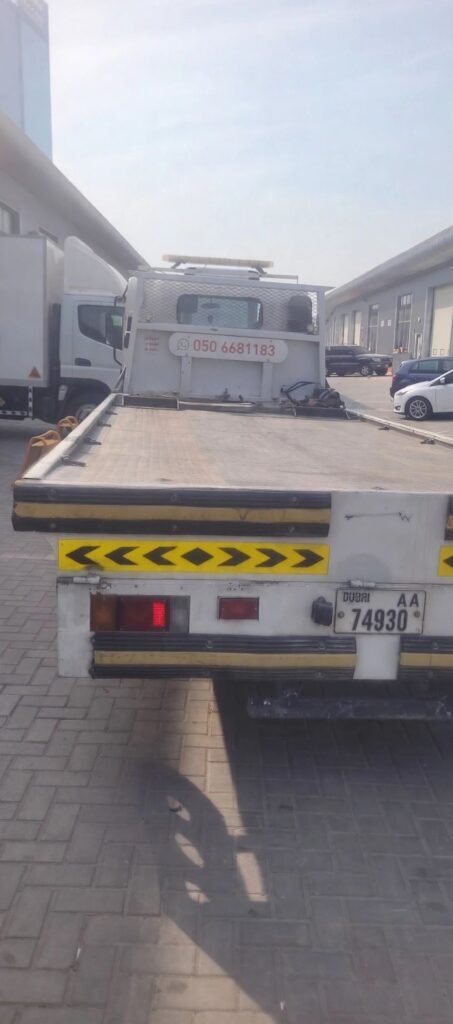
Towing service near me in Dubai means one thing: a tow truck comes to where your car is, loads it safely, and takes it where it needs to go — a garage, your home, or a dealership. You do not need to know which kind of truck you need or how towing works. When you call, the dispatcher finds out where you are, what your car is doing, and where it needs to go, confirms the price with you on the call, and sends the right truck. This guide explains what happens from the moment the tow truck arrives to the moment your car is dropped off — loading, securing, photos and paperwork, riding along or meeting at the destination — so there are no surprises on the day. Recovery Dubai provides towing across Dubai, 24/7. When you call +971 50 668 1183, tell the dispatcher your location, your car type, and where the car needs to go — the exact price is confirmed with you on the call before any truck is dispatched. A location pin shared on WhatsApp is the fastest way to be found, especially on a highway, in a large car park, or in a new community where street names are still unfamiliar. Our car towing page explains flatbed and wheel-lift towing in detail. What “Towing Near Me” Actually Means When you search for a towing service near you, you are not looking for the nearest office — you are looking for the nearest available truck that can reach your car and carry it safely. Recovery trucks move around the city all day, so the truck that comes to you is the one best placed to reach your location with the right equipment for your car. That is why the dispatcher asks where you are first, before anything else: your location decides which truck is sent, not a depot address. It is also why describing your car matters. A small hatchback, a four-wheel-drive SUV, a lowered sports car, and a car that has been in an accident do not all travel the same way. A flatbed truck carries your car fully loaded on its bed, with all four wheels off the road — the safest option for most cars, and the right one for automatic, four-wheel-drive, lowered, and luxury cars. A wheel-lift truck lifts the front wheels and tows the car behind it, and suits some shorter moves where a flatbed is not needed. Tell the dispatcher your car type on the call, and the right truck is sent the first time — there is no need to guess which one you need. Towing is different from a roadside fix. A jump start, a tyre change, or fuel delivery fixes your car where it stands and lets you drive away. Towing moves your car somewhere else. If your car cannot be fixed at the roadside, is not safe to drive, or has a fault that needs a workshop, towing is the answer — and the dispatcher will say so on the call rather than sending a roadside team that cannot finish the job. Before the Tow Truck Arrives — What to Do While You Wait The first job is safety, and it comes before anything to do with the car. If you can, move to a safe place away from moving traffic — behind a barrier, on a pavement, or well clear of the road. Switch on your hazard lights. On a highway, stay on the safe side of the barrier and do not stand between your car and moving traffic. If you are in a car park or a quiet street, the same rule applies: get clear of the road first, then deal with the car. While you wait, gather the details the team will need. Know where the car needs to go — the name and area of the garage, your home address, or the dealership — and have it ready before the truck arrives, because the driver will confirm the destination with you on the spot. If someone else is meeting the car at the destination, make sure they know the truck is coming and have their phone with them. Check that you have your car keys with you, and that nothing you need urgently is locked inside the car — the car will be loaded and secured, and getting back into it mid-tow is not possible. Take photos of your car before the truck arrives, if it is safe to do so. Walk around the car and photograph all four sides, the wheels, and any damage that is already there — scratches, dents, a cracked bumper. These photos are for your own record, and they are useful for the garage and for any later paperwork. If your car has been in an accident, the same photos help at the scene too. Our accident towing page explains what happens after a collision. When the Tow Truck Arrives — The First Checks When the driver arrives, they will check the car before touching it. They will look at what the car is doing — will it start, will it roll, can it steer — and confirm the problem matches what you described on the call. This check matters: a car that can still roll and steer is loaded differently from a car with locked wheels or steering damage, and a car that has been in an accident may need extra care. If anything has changed since your call — the car has moved, a warning light has come on, or you have found the problem is different from what you first thought — say so straight away. The driver will also confirm the destination with you before loading starts. This is the moment to be sure: the garage name and area, your home, or the dealership. If the destination has changed since your call, say so now, not after the car is on the truck. The driver will also confirm the price that
What Does a Car Recovery Service Include? Dubai’s 9 Services Explained
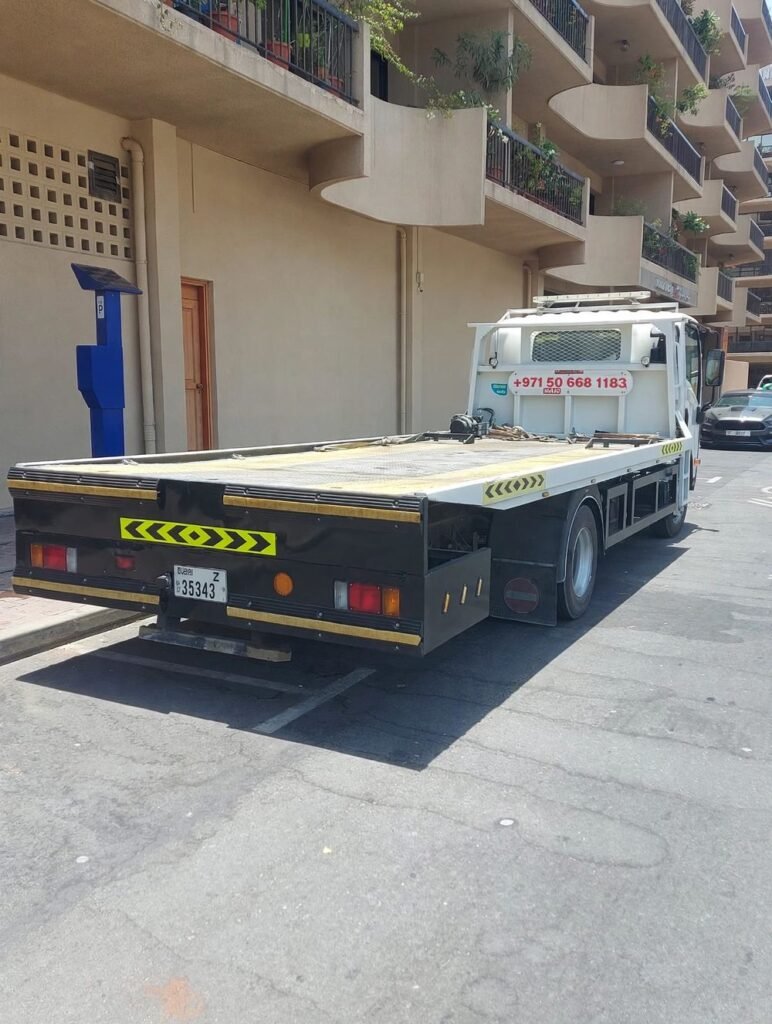
Car recovery service in Dubai is not one single job — it is a set of nine services that cover everything from a car that will not start to a car that has been in an accident or is stuck in sand. When you call for a car recovery service, the dispatcher works out which of those nine services your situation actually needs, confirms the price with you on the call, and sends the right help. This guide explains each of the nine services in plain words, when each one is the right answer, and what happens from your call to drop-off — so you know exactly what you are asking for before you pick up the phone. Recovery Dubai provides all nine services across Dubai, 24/7. When you call +971 50 668 1183, tell the dispatcher where you are, what your car is doing, and where you need to go — the exact price is confirmed with you on the call before any help is dispatched. You do not need to know the name of the service you need; describing the problem is enough, and the dispatcher will send the right help. See the full list on our services page. 1. Car Recovery — When Your Car Needs to Be Moved Car recovery is the core service: your car is loaded onto a recovery truck and taken to wherever it needs to go — a garage, your home, or a dealership. It is the right answer when your car cannot be fixed at the roadside, is not safe to drive, or has a fault that needs a workshop. The truck is chosen for your car — a flatbed for most cars, with extra care for low, luxury, or four-wheel-drive vehicles — and your car is secured before the truck moves. Our car recovery page explains the full process, from the call to drop-off. Recovery is also the fallback when a roadside fix is tried first and does not work. If a jump start fails, a tyre cannot be changed safely where the car stands, or a small repair turns out to be a serious fault, the job turns into a recovery without a second call. Tell the dispatcher what happened and what the car is doing, and they will decide whether a roadside team or a recovery truck is sent first. 2. Car Towing — Flatbed and Wheel-Lift Towing Car towing is the act of moving your car on or behind a truck, and it is the part of recovery most people picture first. A flatbed truck carries your car fully loaded on its bed, with all four wheels off the road — the safest option for most cars, and the right one for automatic, four-wheel-drive, lowered, and luxury cars. A wheel-lift truck lifts the front wheels and tows the car behind it, and suits some shorter moves where a flatbed is not needed. Our car towing page compares flatbed and wheel-lift towing in detail, and explains which is safe for your car. When you call, mention your car type — especially if it is automatic, four-wheel-drive, lowered, or a sports car — because that decides which truck is sent. Also say where the car needs to go: a garage, your home, or a dealership. The car is secured before the truck moves, and you can agree on the drop-off point on the call. 3. Motorcycle Towing — Recovery for Bikes Motorcycle towing is recovery built for bikes, not cars. A bike cannot be loaded the way a car is — it needs a truck with the right ramp and securing points, and a team that knows how to load and strap a motorcycle without damaging it. This service covers motorcycles that have broken down, been in an accident, or cannot be ridden safely. Our motorcycle towing page covers it in detail. If your bike has been in an accident, say so on the call, and do not try to ride it or push it along a busy road. Tell the dispatcher the make and model of the bike and where it needs to go — a garage, your home, or a dealership — and the right truck will be sent for it. 4. Accident Towing — After a Collision Accident towing is recovery after a collision, even a small one. A car that looks drivable after an accident often is not safe to drive — hidden damage to steering, suspension, wheels, or the fuel system is common, and driving on can make the damage worse. Accident towing takes your car from the scene to a garage, your home, or a dealership, without you having to drive it there. Our accident towing page explains what happens at the scene. After an accident, your first job is safety: move to a safe place if you can, switch on your hazard lights, and stay clear of moving traffic. Then call and say where you are, what happened, and whether the car can move at all. Take photos of the damage and the scene before the car is loaded if it is safe to do so — they are useful for the garage and for any later paperwork. The dispatcher will confirm the price on the call before the truck is sent. 5. Winch-Out Recovery — Stuck in Sand or Off the Road Winch-out recovery is for cars that are stuck where a normal truck cannot simply load them — in sand, on a slope, in a ditch, or in a car park ramp or basement where the car cannot move under its own power. A winch pulls the car out to firm ground first, and only then is it loaded onto a truck if it still needs to be moved. Our winch-out recovery page covers when this is needed. If your car is stuck, do not keep pressing the accelerator — spinning the wheels digs the car in deeper, especially in sand. Switch the engine off, tell the dispatcher exactly
Roadside Assistance in Dubai: Jump Starts, Tyre Changes, Fuel & More
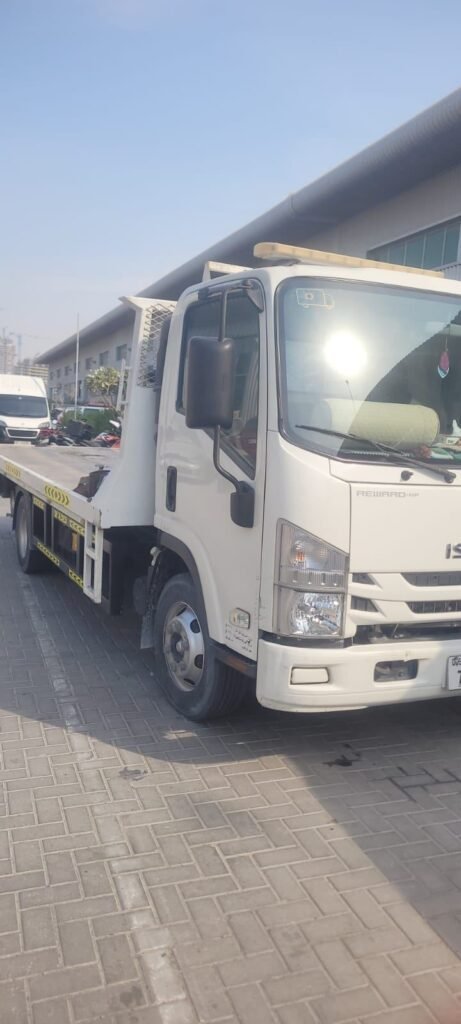
Roadside assistance in Dubai is help that comes to you and fixes your car where it stands — a jump start for a dead battery, a tyre change for a flat, fuel when you have run out, or a small repair at the roadside. If the car can be made safe to drive again on the spot, roadside assistance is usually all you need. If it cannot, the same call turns into recovery: your car is loaded onto a truck and taken to your garage, home, or dealership. This guide explains each roadside service, how to tell which one you need, and what happens from your call to getting moving again. Recovery Dubai provides roadside assistance across Dubai, 24/7. When you call +971 50 668 1183, tell the dispatcher where you are, what your car is doing, and where you need to go — the exact price is confirmed with you on the call before any help is dispatched. You do not need to decide in advance whether you need a jump start, a tyre change, or a full recovery; describing the problem is enough, and the dispatcher will send the right help. Roadside Assistance vs Recovery vs Towing — Which Do You Need? These three words are often used as if they mean the same thing, but they describe different kinds of help — and knowing the difference saves you time on the call. Roadside assistance fixes the car where it is. The help comes to your location, works on the car at the roadside, and you drive away in it. Jump starts, tyre changes, fuel delivery, and small on-site repairs are all roadside assistance. Recovery moves the car when it cannot be fixed at the roadside. Your car is loaded onto a flatbed or recovery truck and taken to wherever it needs to go — a garage, your home, or a dealership. Recovery is the right answer when the fault is serious, the car is not safe to drive, or there is no roadside fix for the problem. Read more on our car recovery page. Towing is the act of moving a car behind or on top of a truck, and it is part of recovery — but it is also used after an accident, when a car cannot move under its own power at all. Our car towing page explains flatbed and wheel-lift towing in detail. In practice, you do not have to choose between them. Tell the dispatcher what happened — “the car will not start”, “the tyre is flat”, “I have run out of fuel”, “there was a small accident” — and they will decide whether a roadside fix or a recovery truck is the right response. If a roadside fix is tried first and it does not work, the job can still turn into a recovery without a second call. 1. Jump Start — When Your Car Will Not Start A dead or weak battery is one of the most common reasons people call for roadside assistance in Dubai. Heat wears batteries out faster here, and the first sign is often a car that clicks instead of turning over, starts slowly, or does not start at all after being parked in the sun or after a short stop. A jump start uses another power source to give your battery enough charge to start the engine. Once the car is running, the battery charges as you drive — but a jump start is a restart, not a repair. If the same battery keeps failing, it usually needs testing and replacing rather than another jump start. Our jump start service covers this, and if the battery turns out to be finished, the team will tell you plainly instead of leaving you to break down again further down the road. Before you call, note what the car is doing: does it click, turn over slowly, or stay completely silent? Are the lights dim, or is the dashboard dead? Those details help the dispatcher confirm that a jump start is the right fix — and if the problem sounds like something else, such as a starter fault, they may send recovery instead so you are not left waiting twice. 2. Tyre Change — A Flat Tyre at the Roadside A flat tyre can happen anywhere — on Sheikh Zayed Road, in a mall car park, or outside your home. A tyre change at the roadside means your spare wheel is fitted so you can drive on, usually to a tyre shop or garage for a proper repair or replacement. The most useful thing you can tell the dispatcher is whether you have a spare wheel and whether it is usable. Many newer cars carry a space-saver spare, a repair kit instead of a spare, or no spare at all — and each of those changes the answer. If you have a good spare, a roadside tyre change is quick. If you have no spare, or the spare is flat too, the car usually needs recovery to a tyre shop instead. Our tyre change page covers this in detail. While you wait, move to a safe place away from moving traffic if you can, switch on your hazard lights, and do not try to change the wheel yourself on a busy road or on soft ground. A wheel change at the roadside needs flat, firm ground and enough space to work safely — if the car is on a slope, a sandy shoulder, or a narrow hard shoulder, say so on the call. 3. Fuel Assistance — When You Have Run Out of Fuel Running out of fuel is more common than most drivers expect, especially on long highway drives or in heavy traffic where the fuel gauge drops faster than planned. Fuel assistance brings enough fuel to your car to get you to the nearest petrol station under your own power. Tell the dispatcher whether your car takes petrol or diesel — putting the wrong fuel in