
Car recovery service in Dubai is not one single job — it is a set of nine services that cover everything from a car that will not start to a car that has been in an accident or is stuck in sand. When you call for a car recovery service, the dispatcher works out which of those nine services your situation actually needs, confirms the price with you on the call, and sends the right help. This guide explains each of the nine services in plain words, when each one is the right answer, and what happens from your call to drop-off — so you know exactly what you are asking for before you pick up the phone.
Recovery Dubai provides all nine services across Dubai, 24/7. When you call +971 50 668 1183, tell the dispatcher where you are, what your car is doing, and where you need to go — the exact price is confirmed with you on the call before any help is dispatched. You do not need to know the name of the service you need; describing the problem is enough, and the dispatcher will send the right help. See the full list on our services page.
1. Car Recovery — When Your Car Needs to Be Moved
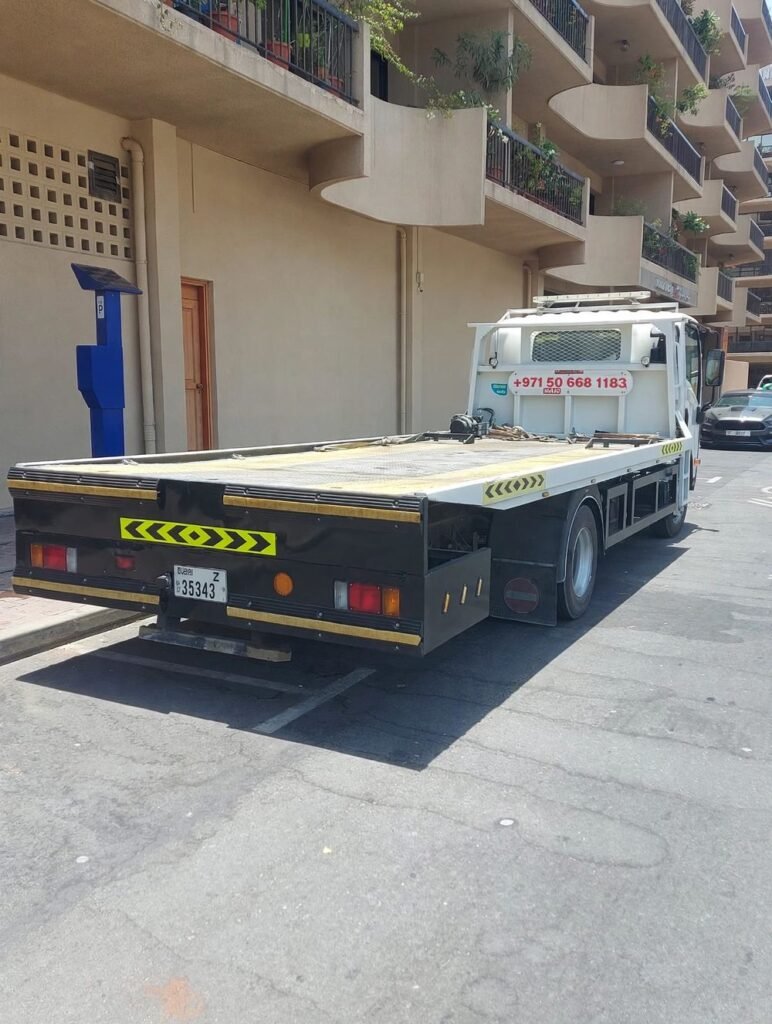
Car recovery is the core service: your car is loaded onto a recovery truck and taken to wherever it needs to go — a garage, your home, or a dealership. It is the right answer when your car cannot be fixed at the roadside, is not safe to drive, or has a fault that needs a workshop. The truck is chosen for your car — a flatbed for most cars, with extra care for low, luxury, or four-wheel-drive vehicles — and your car is secured before the truck moves. Our car recovery page explains the full process, from the call to drop-off.
Recovery is also the fallback when a roadside fix is tried first and does not work. If a jump start fails, a tyre cannot be changed safely where the car stands, or a small repair turns out to be a serious fault, the job turns into a recovery without a second call. Tell the dispatcher what happened and what the car is doing, and they will decide whether a roadside team or a recovery truck is sent first.
2. Car Towing — Flatbed and Wheel-Lift Towing
Car towing is the act of moving your car on or behind a truck, and it is the part of recovery most people picture first. A flatbed truck carries your car fully loaded on its bed, with all four wheels off the road — the safest option for most cars, and the right one for automatic, four-wheel-drive, lowered, and luxury cars. A wheel-lift truck lifts the front wheels and tows the car behind it, and suits some shorter moves where a flatbed is not needed. Our car towing page compares flatbed and wheel-lift towing in detail, and explains which is safe for your car.
When you call, mention your car type — especially if it is automatic, four-wheel-drive, lowered, or a sports car — because that decides which truck is sent. Also say where the car needs to go: a garage, your home, or a dealership. The car is secured before the truck moves, and you can agree on the drop-off point on the call.
3. Motorcycle Towing — Recovery for Bikes
Motorcycle towing is recovery built for bikes, not cars. A bike cannot be loaded the way a car is — it needs a truck with the right ramp and securing points, and a team that knows how to load and strap a motorcycle without damaging it. This service covers motorcycles that have broken down, been in an accident, or cannot be ridden safely. Our motorcycle towing page covers it in detail.
If your bike has been in an accident, say so on the call, and do not try to ride it or push it along a busy road. Tell the dispatcher the make and model of the bike and where it needs to go — a garage, your home, or a dealership — and the right truck will be sent for it.
4. Accident Towing — After a Collision
Accident towing is recovery after a collision, even a small one. A car that looks drivable after an accident often is not safe to drive — hidden damage to steering, suspension, wheels, or the fuel system is common, and driving on can make the damage worse. Accident towing takes your car from the scene to a garage, your home, or a dealership, without you having to drive it there. Our accident towing page explains what happens at the scene.
After an accident, your first job is safety: move to a safe place if you can, switch on your hazard lights, and stay clear of moving traffic. Then call and say where you are, what happened, and whether the car can move at all. Take photos of the damage and the scene before the car is loaded if it is safe to do so — they are useful for the garage and for any later paperwork. The dispatcher will confirm the price on the call before the truck is sent.
5. Winch-Out Recovery — Stuck in Sand or Off the Road
Winch-out recovery is for cars that are stuck where a normal truck cannot simply load them — in sand, on a slope, in a ditch, or in a car park ramp or basement where the car cannot move under its own power. A winch pulls the car out to firm ground first, and only then is it loaded onto a truck if it still needs to be moved. Our winch-out recovery page covers when this is needed.
If your car is stuck, do not keep pressing the accelerator — spinning the wheels digs the car in deeper, especially in sand. Switch the engine off, tell the dispatcher exactly where the car is and what it is stuck in, and say whether the car can still move at all. The team will bring the right winch equipment for the situation.
6. Tyre Change — A Flat Tyre at the Roadside
A tyre change is a roadside service: your spare wheel is fitted where the car stands, so you can drive on to a tyre shop or garage for a proper repair or replacement. It is the right answer when you have a flat tyre and a usable spare wheel. If you have no spare, only a repair kit, or a spare that is flat too, the car usually needs recovery to a tyre shop instead. Our tyre change page explains what to check before you call.
When you call, say whether you have a spare wheel and whether it is usable — that one detail decides whether a roadside team or a recovery truck is sent. While you wait, move to a safe place away from moving traffic if you can, switch on your hazard lights, and do not try to change the wheel yourself on a busy road, a slope, or soft ground.
7. Jump Starting — When Your Car Will Not Start
Jump starting gives a dead or weak battery enough charge to start the engine, so you can drive away in your own car. It is the right answer when the car clicks instead of turning over, starts slowly, or does not start at all after being parked — all common signs of a weak battery in Dubai’s heat. A jump start is a restart, not a repair: if the same battery keeps failing, it usually needs testing and replacing rather than another jump start. Our jump start service covers this.
Before you call, note what the car is doing: does it click, turn over slowly, or stay completely silent? Are the lights dim, or is the dashboard dead? Those details help the dispatcher confirm that a jump start is the right fix — and if the problem sounds like something else, such as a starter fault, they may send recovery instead so you are not left waiting twice.
8. On-Site Repair — Small Faults Fixed Where You Stand
On-site repair is the middle step between a jump start and a full recovery: the team looks at your car where it is and fixes what can safely be fixed there — a loose connection, a minor electrical fault, or a small problem that needs a simple part. It is the right answer when the fault is small and the car can be made safe to drive again on the spot. Our on-site repair page explains what this covers.
What matters is honesty about what can and cannot be done at the roadside. A repair that would leave the car unsafe to drive is not a roadside repair — it is a recovery job. If the team finds a serious fault, such as an overheating engine, a fuel leak, or a loud grinding noise, they will say so and arrange recovery to a garage instead of risking further damage. If a warning light is on, tell the dispatcher which one it is and what colour it is — a red light usually means stop and do not drive on.
9. Fuel Assistance — When You Have Run Out of Fuel
Fuel assistance brings enough fuel to your car to get you to the nearest petrol station under your own power. It is the right answer when you have run out of fuel on a highway, in traffic, or anywhere away from a station. Our fuel assistance service is for exactly this situation.
Always confirm on the call whether your car takes petrol or diesel — the wrong fuel causes real damage, so this is checked before any fuel is delivered. If you are not sure which fuel your car takes, say so; the team will help you check rather than guess. Running out of fuel is also worth treating as a warning sign: keep the tank above a quarter full in Dubai’s heat and traffic, and fill up before a long drive rather than during it.
What Happens When You Call — The Same Steps for Every Service
Whichever of the nine services you need, the call follows the same steps. First, you describe the problem, your location, your car, and where you need to go. A location pin shared on WhatsApp is the fastest way to be found, especially on a highway or in a large car park. The dispatcher confirms the price with you on the call before any help is dispatched, and tells you what help is coming.
When the team arrives, they check the car first and confirm the problem before starting work — a jump start is only useful if the battery is actually the problem, and a recovery is only the answer if the car cannot be fixed where it stands. If a roadside fix is tried and it does not work, the job can still turn into a recovery without a second call. When the work is done, the team will ask you to start the car and check it with you before leaving, or load the car and confirm the drop-off point with you before the truck moves.
What a Car Recovery Service Does Not Include
Knowing the limits helps you ask for the right help the first time. A car recovery service does not repair your car at a workshop — recovery takes the car to a garage, and the garage does the repair. It does not replace a battery, a tyre, or a part at the roadside beyond a small on-site fix; if a part needs replacing, the car goes to a garage. And it does not decide fault or handle paperwork after an accident — it moves your car safely from the scene, and the garage and any paperwork come after.
None of that changes the call. One number covers all nine services, and the dispatcher decides which one fits your situation — you only need to describe what happened and where you are.
What to Tell the Dispatcher — A Short Checklist
Have these details ready when you call, and the right help will be sent the first time: your location, with a shared pin if you can; what your car is doing — will not start, flat tyre, stuck, accident, out of fuel; your car type, especially if it is automatic, four-wheel-drive, lowered, a sports car, or a motorcycle; whether you have a usable spare wheel, if it is a tyre problem; whether your car takes petrol or diesel, if it is a fuel problem; and where you need the car to go — a garage, your home, or a dealership.
Frequently Asked Questions
What does a car recovery service include?
A car recovery service in Dubai includes nine services: car recovery, car towing, motorcycle towing, accident towing, winch-out recovery, tyre change, jump starting, on-site repair, and fuel assistance. One call covers all of them — the dispatcher works out which service your situation needs, confirms the price on the call, and sends the right help.
Do I need to know which service I need before I call?
No. Describe what happened and what your car is doing — “the car will not start”, “the tyre is flat”, “I am stuck in sand”, “there was a small accident” — and the dispatcher will decide whether you need a roadside fix or a recovery truck. If a roadside fix is tried first and it does not work, the job can still turn into a recovery without a second call.
How much does a car recovery service cost in Dubai?
It depends on the service you need, where you are, your vehicle, the distance, and the time of day — there is no single fixed price. The exact price is always confirmed with you on the call before any help is dispatched, so you know what you are paying before anyone sets off.
Can a recovery service move a motorcycle or a luxury car?
Yes — motorcycle towing is a separate service with the right ramp and securing points for bikes, and car recovery uses a flatbed for luxury, lowered, and four-wheel-drive cars so all four wheels stay off the road. Mention the vehicle type on the call so the right truck is sent.
What if my car is stuck in sand or off the road?
That is a winch-out recovery. A winch pulls the car out to firm ground first, and only then is it loaded onto a truck if it still needs to be moved. Do not keep pressing the accelerator — spinning the wheels digs the car in deeper. Switch the engine off and tell the dispatcher exactly where the car is stuck.
Will the recovery team repair my car at the roadside?
Only small faults that can safely be fixed where the car stands — a loose connection, a minor electrical fault, or a simple part. A repair that would leave the car unsafe to drive is not a roadside repair; in that case the car is recovered to a garage, where the repair is done properly.
Our Recovery Services in Dubai
Need a Car Recovery Service in Dubai? One Call Covers All 9 Services
Tell us where you are and what your car is doing — we will confirm the price on the call and send the right help, whether it is recovery, towing, a jump start, a tyre change, fuel, or a winch-out, anywhere in Dubai, 24/7.
Call +971 50 668 1183 WhatsApp Us
24/7 across Dubai — or reach us through our contact page.