
Roadside assistance in Dubai is help that comes to you and fixes your car where it stands — a jump start for a dead battery, a tyre change for a flat, fuel when you have run out, or a small repair at the roadside. If the car can be made safe to drive again on the spot, roadside assistance is usually all you need. If it cannot, the same call turns into recovery: your car is loaded onto a truck and taken to your garage, home, or dealership. This guide explains each roadside service, how to tell which one you need, and what happens from your call to getting moving again.
Recovery Dubai provides roadside assistance across Dubai, 24/7. When you call +971 50 668 1183, tell the dispatcher where you are, what your car is doing, and where you need to go — the exact price is confirmed with you on the call before any help is dispatched. You do not need to decide in advance whether you need a jump start, a tyre change, or a full recovery; describing the problem is enough, and the dispatcher will send the right help.
Roadside Assistance vs Recovery vs Towing — Which Do You Need?
These three words are often used as if they mean the same thing, but they describe different kinds of help — and knowing the difference saves you time on the call.
Roadside assistance fixes the car where it is. The help comes to your location, works on the car at the roadside, and you drive away in it. Jump starts, tyre changes, fuel delivery, and small on-site repairs are all roadside assistance.
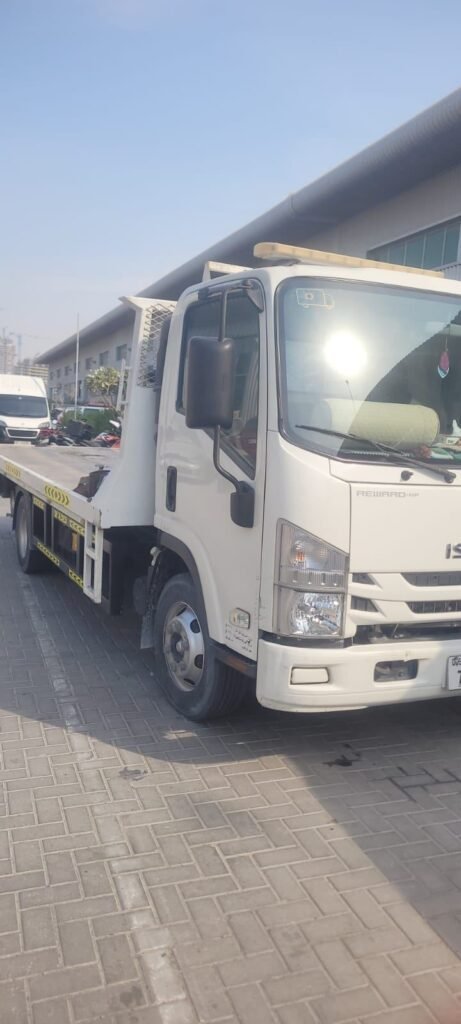
Recovery moves the car when it cannot be fixed at the roadside. Your car is loaded onto a flatbed or recovery truck and taken to wherever it needs to go — a garage, your home, or a dealership. Recovery is the right answer when the fault is serious, the car is not safe to drive, or there is no roadside fix for the problem. Read more on our car recovery page.
Towing is the act of moving a car behind or on top of a truck, and it is part of recovery — but it is also used after an accident, when a car cannot move under its own power at all. Our car towing page explains flatbed and wheel-lift towing in detail.
In practice, you do not have to choose between them. Tell the dispatcher what happened — “the car will not start”, “the tyre is flat”, “I have run out of fuel”, “there was a small accident” — and they will decide whether a roadside fix or a recovery truck is the right response. If a roadside fix is tried first and it does not work, the job can still turn into a recovery without a second call.
1. Jump Start — When Your Car Will Not Start
A dead or weak battery is one of the most common reasons people call for roadside assistance in Dubai. Heat wears batteries out faster here, and the first sign is often a car that clicks instead of turning over, starts slowly, or does not start at all after being parked in the sun or after a short stop.
A jump start uses another power source to give your battery enough charge to start the engine. Once the car is running, the battery charges as you drive — but a jump start is a restart, not a repair. If the same battery keeps failing, it usually needs testing and replacing rather than another jump start. Our jump start service covers this, and if the battery turns out to be finished, the team will tell you plainly instead of leaving you to break down again further down the road.
Before you call, note what the car is doing: does it click, turn over slowly, or stay completely silent? Are the lights dim, or is the dashboard dead? Those details help the dispatcher confirm that a jump start is the right fix — and if the problem sounds like something else, such as a starter fault, they may send recovery instead so you are not left waiting twice.
2. Tyre Change — A Flat Tyre at the Roadside
A flat tyre can happen anywhere — on Sheikh Zayed Road, in a mall car park, or outside your home. A tyre change at the roadside means your spare wheel is fitted so you can drive on, usually to a tyre shop or garage for a proper repair or replacement.
The most useful thing you can tell the dispatcher is whether you have a spare wheel and whether it is usable. Many newer cars carry a space-saver spare, a repair kit instead of a spare, or no spare at all — and each of those changes the answer. If you have a good spare, a roadside tyre change is quick. If you have no spare, or the spare is flat too, the car usually needs recovery to a tyre shop instead. Our tyre change page covers this in detail.
While you wait, move to a safe place away from moving traffic if you can, switch on your hazard lights, and do not try to change the wheel yourself on a busy road or on soft ground. A wheel change at the roadside needs flat, firm ground and enough space to work safely — if the car is on a slope, a sandy shoulder, or a narrow hard shoulder, say so on the call.
3. Fuel Assistance — When You Have Run Out of Fuel
Running out of fuel is more common than most drivers expect, especially on long highway drives or in heavy traffic where the fuel gauge drops faster than planned. Fuel assistance brings enough fuel to your car to get you to the nearest petrol station under your own power.
Tell the dispatcher whether your car takes petrol or diesel — putting the wrong fuel in causes real damage, so this is always confirmed on the call before any fuel is delivered. If you are not sure which fuel your car takes, say so; the team will help you check rather than guess. Our fuel assistance service is for exactly this situation.
Running out of fuel is also worth treating as a warning sign. If it keeps happening, it is usually a habit worth changing rather than a car fault: keep the tank above a quarter full in Dubai’s heat and traffic, and fill up before a long drive rather than during it. A car that repeatedly runs dry can also suffer fuel-system trouble, so a one-off delivery is a rescue, not a routine.
4. On-Site Repair — Small Faults Fixed Where You Stand
Not every breakdown needs a truck. Some faults are small enough to fix at the roadside — a loose connection, a minor electrical fault, a belt or hose problem that can be made safe, or a fault that needs a simple part. On-site repair is the middle step between a jump start and a full recovery: the team looks at the car where it is and fixes what can safely be fixed there.
What matters is honesty about what can and cannot be done at the roadside. A repair that would leave the car unsafe to drive is not a roadside repair — it is a recovery job. If the team finds a serious fault, such as an overheating engine, a fuel leak, or a loud grinding noise from the engine or gearbox, they will say so and arrange recovery to a garage instead of risking further damage. See our on-site repair page for what this covers.
If your car has a warning light on the dashboard, tell the dispatcher which one it is and what colour it is. A red warning light usually means stop and do not drive on; an amber one usually means get the car checked soon. That one detail often decides whether the answer is a roadside visit or a recovery truck.
What Happens When Help Arrives
Knowing what happens next takes most of the stress out of a breakdown. The sequence is the same for most roadside calls:
First, you call and describe the problem, your location, your car, and where you need to go. A location pin shared on WhatsApp is the fastest way to be found, especially on a highway or in a large car park. The dispatcher confirms the price with you on the call before any help is dispatched, and tells you what help is coming.
When the team arrives, they check the car first and confirm the problem before starting work — a jump start is only useful if the battery is actually the problem, and a tyre change only helps if the wheel can be changed safely where the car is standing. If the roadside fix works, they will usually ask you to start the car and check it with you before leaving, so you are not left wondering whether it will start again at the next stop.
Keep your phone charged and with you while you wait, and stay where the team can find you. If you have to move — into a shop, a shaded area, or a safer spot — tell the dispatcher so the team is not searching for a car that has moved.
When Roadside Assistance Is Not Enough
Roadside assistance has clear limits, and knowing them helps you ask for the right help the first time. You almost certainly need recovery rather than a roadside fix when:
Your car was in an accident, even a small one — hidden damage is common, and a car that looks drivable may not be safe. Your engine is overheating, leaking fuel or coolant, or making a loud grinding or knocking noise. Your car will not start and a jump start has already been tried. You have a flat tyre and no usable spare. Or the car is stuck somewhere a roadside fix cannot reach it — in sand, on a slope, or blocking a lane where working on it would be unsafe.
In all of these cases, the right call is still the same number. The dispatcher will send a recovery truck instead of a roadside team, and your car will be taken to a garage, your home, or a dealership — whichever you choose on the call.
Staying Safe While You Wait for Roadside Help
Where you wait matters as much as how fast help arrives. If you can, pull over somewhere with space between your car and moving traffic — a parking bay, a petrol station, or the far side of a hard shoulder — and switch on your hazard lights. Stay clear of moving traffic, and keep children and passengers away from the road side of the car.
At night, keep your lights on so other drivers can see you, and wait in a lit area if one is close by. Do not stand behind the car on a highway, and do not try to flag down passing cars for a jump start — a wrong connection can damage both cars. If you feel unsafe at any point, say so on the call; the dispatcher can advise you on the safest place to wait.
Keep water in the car in summer, and keep your phone charged before long drives. A breakdown in Dubai’s heat is uncomfortable enough without a dead phone, and a charged phone is also how the recovery team finds you.
Frequently Asked Questions
What is roadside assistance in Dubai?
Roadside assistance is help that comes to your car and fixes it where it stands — a jump start, a tyre change, fuel delivery, or a small on-site repair. If the car cannot be fixed at the roadside, the same call becomes a recovery, and your car is taken to a garage, your home, or a dealership.
How much does roadside assistance cost in Dubai?
It depends on the service you need, where you are, your vehicle, and the time of day — there is no single fixed price. The exact price is always confirmed with you on the call before any help is dispatched, so you know what you are paying before anyone sets off.
My car will not start — do I need a jump start or a recovery?
Usually a jump start, if the battery is the problem — clicking, slow starting, or dim lights all point to the battery. If a jump start has already been tried and the car still will not start, or the fault is something else such as the starter, recovery is the safer answer. Describe what the car is doing on the call and the dispatcher will decide.
Can you change my tyre if I have no spare wheel?
No — a tyre change needs a usable spare. If your car has no spare, only a repair kit, or a spare that is flat as well, the car usually needs recovery to a tyre shop instead. Tell the dispatcher what you have when you call so the right help is sent first time.
I have run out of fuel — how much fuel do you bring?
Enough fuel to get your car to the nearest petrol station under its own power. Always confirm on the call whether your car takes petrol or diesel — the wrong fuel causes real damage, so this is checked before any fuel is delivered.
What should I tell the dispatcher when I call for roadside assistance?
Your location (a shared location pin is fastest), what your car is doing, your car type, and where you need to go. Mention warning lights, noises, and whether you have a spare wheel — those details decide whether you get a roadside team or a recovery truck, and they help the team arrive ready to fix the problem.
Our Recovery Services in Dubai
Stuck at the Roadside in Dubai? One Call Gets Help to You
Tell us where you are and what your car is doing — we will confirm the price on the call and send the right help, whether it is a jump start, a tyre change, fuel, on-site repair, or recovery, anywhere in Dubai, 24/7.
Call +971 50 668 1183 WhatsApp Us
24/7 across Dubai — or reach us through our contact page.