
Towing service near me in Dubai means one thing: a tow truck comes to where your car is, loads it safely, and takes it where it needs to go — a garage, your home, or a dealership. You do not need to know which kind of truck you need or how towing works. When you call, the dispatcher finds out where you are, what your car is doing, and where it needs to go, confirms the price with you on the call, and sends the right truck. This guide explains what happens from the moment the tow truck arrives to the moment your car is dropped off — loading, securing, photos and paperwork, riding along or meeting at the destination — so there are no surprises on the day.
Recovery Dubai provides towing across Dubai, 24/7. When you call +971 50 668 1183, tell the dispatcher your location, your car type, and where the car needs to go — the exact price is confirmed with you on the call before any truck is dispatched. A location pin shared on WhatsApp is the fastest way to be found, especially on a highway, in a large car park, or in a new community where street names are still unfamiliar. Our car towing page explains flatbed and wheel-lift towing in detail.
What “Towing Near Me” Actually Means
When you search for a towing service near you, you are not looking for the nearest office — you are looking for the nearest available truck that can reach your car and carry it safely. Recovery trucks move around the city all day, so the truck that comes to you is the one best placed to reach your location with the right equipment for your car. That is why the dispatcher asks where you are first, before anything else: your location decides which truck is sent, not a depot address.
It is also why describing your car matters. A small hatchback, a four-wheel-drive SUV, a lowered sports car, and a car that has been in an accident do not all travel the same way. A flatbed truck carries your car fully loaded on its bed, with all four wheels off the road — the safest option for most cars, and the right one for automatic, four-wheel-drive, lowered, and luxury cars. A wheel-lift truck lifts the front wheels and tows the car behind it, and suits some shorter moves where a flatbed is not needed. Tell the dispatcher your car type on the call, and the right truck is sent the first time — there is no need to guess which one you need.
Towing is different from a roadside fix. A jump start, a tyre change, or fuel delivery fixes your car where it stands and lets you drive away. Towing moves your car somewhere else. If your car cannot be fixed at the roadside, is not safe to drive, or has a fault that needs a workshop, towing is the answer — and the dispatcher will say so on the call rather than sending a roadside team that cannot finish the job.
Before the Tow Truck Arrives — What to Do While You Wait
The first job is safety, and it comes before anything to do with the car. If you can, move to a safe place away from moving traffic — behind a barrier, on a pavement, or well clear of the road. Switch on your hazard lights. On a highway, stay on the safe side of the barrier and do not stand between your car and moving traffic. If you are in a car park or a quiet street, the same rule applies: get clear of the road first, then deal with the car.
While you wait, gather the details the team will need. Know where the car needs to go — the name and area of the garage, your home address, or the dealership — and have it ready before the truck arrives, because the driver will confirm the destination with you on the spot. If someone else is meeting the car at the destination, make sure they know the truck is coming and have their phone with them. Check that you have your car keys with you, and that nothing you need urgently is locked inside the car — the car will be loaded and secured, and getting back into it mid-tow is not possible.
Take photos of your car before the truck arrives, if it is safe to do so. Walk around the car and photograph all four sides, the wheels, and any damage that is already there — scratches, dents, a cracked bumper. These photos are for your own record, and they are useful for the garage and for any later paperwork. If your car has been in an accident, the same photos help at the scene too. Our accident towing page explains what happens after a collision.
When the Tow Truck Arrives — The First Checks
When the driver arrives, they will check the car before touching it. They will look at what the car is doing — will it start, will it roll, can it steer — and confirm the problem matches what you described on the call. This check matters: a car that can still roll and steer is loaded differently from a car with locked wheels or steering damage, and a car that has been in an accident may need extra care. If anything has changed since your call — the car has moved, a warning light has come on, or you have found the problem is different from what you first thought — say so straight away.
The driver will also confirm the destination with you before loading starts. This is the moment to be sure: the garage name and area, your home, or the dealership. If the destination has changed since your call, say so now, not after the car is on the truck. The driver will also confirm the price that was agreed on the call — the exact price is confirmed before dispatch, so there should be no new figure at the roadside. If anything about the price is unclear, ask before the car is loaded.
Loading Your Car — How It Gets Onto the Truck
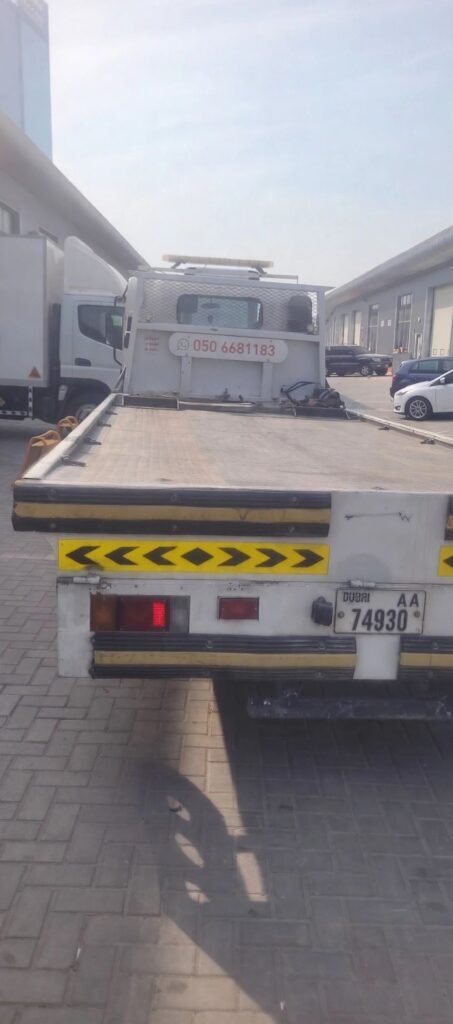
On a flatbed truck, the bed tilts down to the ground and your car is driven or winched up onto it. If your car still starts and drives, the driver will usually drive it up the bed slowly and carefully. If your car will not start, or cannot be driven safely, a winch pulls it up instead — the car is attached to the winch cable and drawn onto the bed without anyone having to push it. Either way, the car is positioned in the centre of the bed, with room on all sides, before anything is secured.
On a wheel-lift truck, the front wheels are lifted off the ground and the car is towed behind the truck on its rear wheels. This suits some shorter moves, but it is not right for every car — automatic, four-wheel-drive, lowered, and luxury cars are usually carried on a flatbed instead, with all four wheels off the road. If the driver has sent a flatbed for your car, that is a deliberate choice for your car’s safety, not a more expensive option for its own sake.
Loading takes care, not speed. The driver will check the car’s clearance as it goes up the bed — low bumpers and spoilers can catch on the ramp — and will stop and adjust rather than force the car. If your car is lowered or has a body kit, mention it before loading starts. The same applies if the car is stuck in sand or off the road: a winch-out may be needed first to pull the car to firm ground before it can be loaded at all.
Securing Your Car — Why It Cannot Move Once Loaded
Once your car is on the bed, it is secured before the truck moves — this is not a quick step, and it should not be rushed. Straps or chains hold the wheels in place, and the car is checked from all sides to make sure it cannot shift, roll, or slide during the journey. The handbrake is applied, the car is put in park or in gear, and the steering is locked straight. The driver will walk around the car and check every securing point before setting off.
This is also why you should not leave loose items in the car that could move around during the tow. Anything valuable, fragile, or easily damaged should come with you, not stay in the boot or on the seats. If there is something in the car that cannot be removed, tell the driver so they know it is there. A properly secured car does not move on the bed at all — if you see the car shifting, or a strap looks loose, say so immediately rather than waiting for the destination.
Photos and Paperwork Before the Tow
Before the truck leaves, the driver will usually take their own photos of the car as loaded — the same record you made before they arrived, now from the truck’s side. This is normal, and it protects both sides: it records the car’s condition at the point of loading. If you took photos before the truck arrived, keep them — together they give a clear record of the car’s condition from the breakdown to the drop-off.
As for paperwork, there is usually very little at the roadside. The booking is the call itself: your location, your car, your destination, and the price confirmed on that call. You do not need to sign forms at the roadside before the tow, and you do not need to produce documents the driver has not asked for. What you do need is the destination confirmed, your phone with you, and a way for the person meeting the car — if that is someone else — to be reached. If your car is going to a garage, it helps to let the garage know the car is on its way and when it is expected, so someone is there to receive it.
Riding Along or Meeting at the Destination
One question almost everyone asks is whether they can ride with the driver. The honest answer is that it depends on the truck and the situation. Some tow trucks have a passenger seat; others do not, and the driver may not be able to take a passenger for safety or insurance reasons. Ask the driver when they arrive — do not assume there will be a seat. If there is no passenger seat, you will need your own way to the destination: a taxi, a ride-hailing car, or a lift from someone else.
If you are not riding along, agree with the driver how you will stay in touch. Keep your phone on and charged, and make sure the driver has the right number for you and for anyone meeting the car. The most common arrangement is simple: you travel separately, and you meet the truck at the destination. If you cannot get there yourself, send someone you trust — but make sure they know the car, the destination, and what to check when it arrives, and that they can reach you by phone.
Either way, do not follow the tow truck closely in your own car. Give it space, and meet it at the destination instead. A tow truck with a loaded car brakes and turns differently from an empty one, and tailgating it puts you and the driver at risk.
At the Drop-Off — What to Check Before the Truck Leaves
When the truck reaches the destination, the driver will unload your car in a safe, flat place — a garage forecourt, a driveway, or a parking area, wherever was agreed. The car is unloaded the same way it was loaded, slowly and carefully, and the driver will check the car’s condition with you before leaving. Walk around the car with them. Check the wheels, the bumpers, and any damage you photographed before the tow. If anything looks different from your photos, say so there and then, while the driver is still with you — not after they have gone.
Once the car is off the truck, confirm where the keys are going. If the car is going to a garage, the keys usually stay with the garage; if it is going to your home, they come back to you. Make sure the garage knows the car has arrived, especially if you are not there yourself. And if the car still needs work, the next step is the garage’s, not the tow truck’s — towing moves your car safely to where it can be repaired, and the repair itself happens at the workshop.
What Towing Costs — And What Decides It
There is no single fixed price for towing in Dubai, and any figure quoted without knowing your situation would be a guess. What decides the price is the distance, your vehicle type, the kind of truck needed, the time of day, and the situation — a car stuck in sand or damaged in an accident needs different equipment from a car that simply will not start in a car park. That is why the exact price is always confirmed with you on the call before any truck is dispatched: you know what you are paying before anyone sets off, and the figure agreed on the call is the figure that applies.
If a quote sounds unusually cheap, ask what it actually covers before you agree to it — a price that leaves out the distance, the truck type, or the destination is not a complete price. And if the situation changes after the call — the destination changes, or the car turns out to need a different truck — say so as soon as you know, so the price can be confirmed again before the work starts. The full pricing guide is in our post on what car recovery costs in Dubai.
When Towing Is Not the Answer
Not every breakdown needs a tow truck. If your car will not start but the battery is the problem, a jump start fixes it where it stands. If you have a flat tyre and a usable spare, a tyre change gets you moving again. If you have run out of fuel, fuel assistance gets you to the nearest petrol station. These are roadside services — they fix the car where it is, and you drive away in it. Our post on roadside assistance in Dubai explains which of these fits which problem.
The dispatcher will tell you honestly if a roadside fix is enough, because sending a tow truck for a job a jump start could solve wastes your time and money. But the reverse is also true: if a roadside fix is tried and it does not work — the jump start fails, the tyre cannot be changed safely where the car stands, or the fault turns out to be serious — the job can still turn into a recovery without a second call. You do not need to decide in advance which one you need; describing the problem is enough, and the dispatcher will send the right help first.
What to Tell the Dispatcher — A Short Checklist
Have these details ready when you call, and the right truck will be sent the first time: your location, with a shared pin if you can; what your car is doing — will not start, flat tyre, stuck, accident, out of fuel; your car type, especially if it is automatic, four-wheel-drive, lowered, a sports car, or a motorcycle; whether the car can still roll and steer; where the car needs to go — a garage, your home, or a dealership; and whether you need a passenger seat, so the driver knows before they arrive. If you have already taken photos of the car, say so — they help everyone, and they take a minute to capture while you wait.
Frequently Asked Questions
How do I find a towing service near me in Dubai?
Call +971 50 668 1183 and share your location — a pin on WhatsApp is the fastest way to be found. The dispatcher works out which truck can reach you with the right equipment for your car, confirms the price on the call, and sends it to you. You do not need to know which kind of truck you need; describing your car and the problem is enough.
What happens when the tow truck arrives?
The driver checks your car first — whether it will start, roll, and steer — and confirms the destination and the price agreed on the call. Then the car is loaded onto the truck, usually a flatbed, and secured with straps or chains so it cannot move during the journey. Photos are taken before the truck leaves, and the car is checked again with you at the drop-off.
Can I ride along with the tow truck driver?
It depends on the truck — some have a passenger seat and some do not, and the driver may not be able to take a passenger for safety reasons. Ask the driver when they arrive, and do not assume there will be a seat. If there is no seat, arrange your own way to the destination and meet the truck there, keeping your phone on so the driver can reach you.
Should I take photos of my car before it is towed?
Yes — photograph all four sides, the wheels, and any damage that is already there, if it is safe to do so. Keep the photos as your own record, and check the car against them with the driver at the drop-off before the truck leaves. The driver will usually take their own photos of the car as loaded, too.
How much does towing cost in Dubai?
It depends on the distance, your vehicle type, the kind of truck needed, the time of day, and the situation — there is no single fixed price. The exact price is always confirmed with you on the call before any truck is dispatched, so you know what you are paying before anyone sets off.
Is my car safe on a flatbed tow truck?
Yes — a flatbed carries your car fully loaded on its bed, with all four wheels off the road, and the car is strapped or chained in place so it cannot shift during the journey. It is the safest option for most cars, and the right one for automatic, four-wheel-drive, lowered, and luxury cars. The driver checks every securing point before the truck moves.
Our Recovery Services in Dubai
Need a Tow Truck Near You in Dubai? Call Now
Tell us where you are and where your car needs to go — we will confirm the price on the call and send the right truck, anywhere in Dubai, 24/7.
Call +971 50 668 1183 WhatsApp Us
24/7 across Dubai — or reach us through our contact page.