
Need car towing in Dubai and wondering whether a flatbed or a wheel-lift truck is safe for your car? For most cars — especially all-wheel-drive, lowered, sports, and luxury cars — a flatbed is the safest choice, because all four wheels are off the ground and nothing drags or rolls during the tow. A wheel-lift truck can be fine for a standard front-wheel-drive car over a short distance, but it is not right for every car.
Recovery Dubai runs both kinds of towing across Dubai, 24/7. When you call +971 50 668 1183, the dispatcher asks what car you have so the right truck is sent the first time — and the price is confirmed with you on the call before anything moves. For the full service, see our car towing in Dubai page.
How Flatbed Towing Works
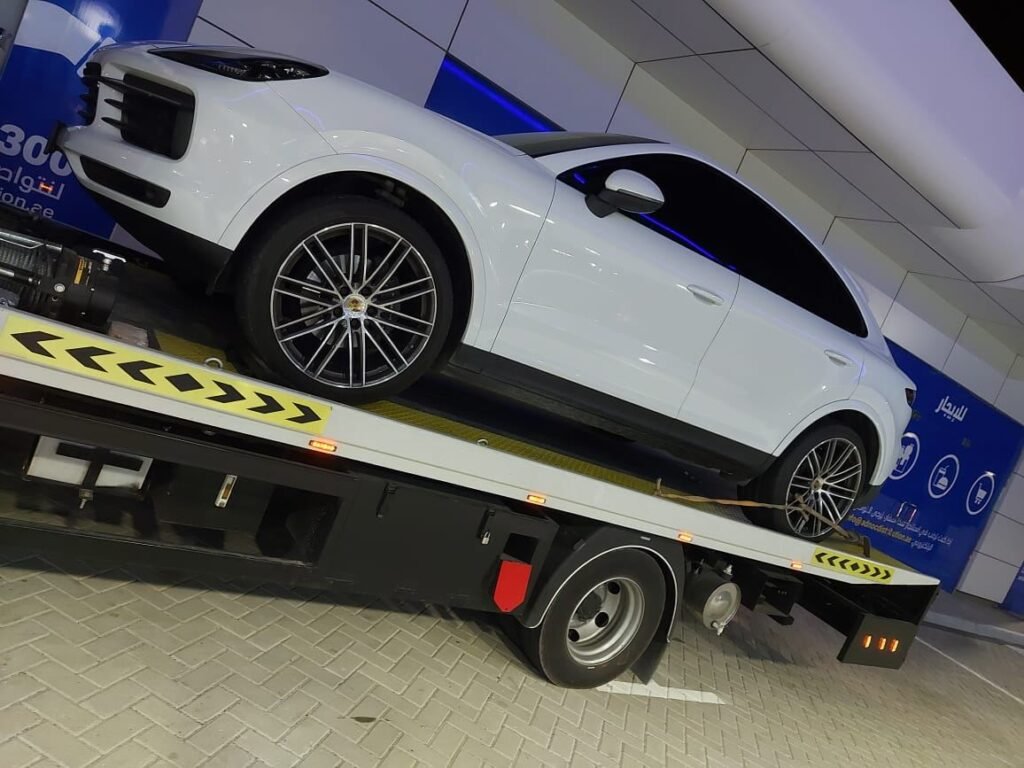
A flatbed truck carries a long, flat platform on the back. The platform tilts down to the ground, your car is winched or driven up onto it, and all four wheels sit on the bed for the whole journey, strapped down so the car cannot move. Nothing about the car touches the road while it is being transported.
Because no wheel turns during a flatbed tow, the car’s gearbox, drivetrain, and tyres are under no strain. That is why it is the standard choice after an accident, for cars that will not roll, and for any car whose drivetrain must not be turned while it is being moved.
How Wheel-Lift Towing Works
A wheel-lift truck uses a metal cradle that slides under the front or rear wheels of your car and lifts that end off the ground. The other two wheels stay on the road and roll along behind the truck. It is quick to set up and works well for a standard front-wheel-drive car that still rolls freely, especially over a short distance. But it is not suitable for cars whose drivetrain, steering, or wheels are damaged.
Flatbed vs Wheel-Lift at a Glance
- Best for: flatbed — all-wheel-drive, lowered, sports, luxury, and accident-damaged cars; wheel-lift — standard front-wheel-drive cars that roll freely.
- After an accident: flatbed — the car is carried, so damaged parts are not stressed; wheel-lift — only if the car rolls straight and nothing underneath is damaged.
- Risk of extra damage: flatbed — very low; wheel-lift — higher for the wrong car type or a damaged car.
Which Towing Method Is Safe for Your Car?
The right method depends on your car:
All-wheel-drive (AWD) and 4×4 cars
Choose a flatbed. In an AWD or 4×4, the drivetrain links all four wheels together, so towing with two wheels on the ground forces parts of it to turn while the rest does not — and that can cause damage. A flatbed keeps all four wheels off the road, so the drivetrain is never involved.
Lowered cars and sports cars
Choose a flatbed. A lowered car sits close to the ground, so a wheel-lift cradle can catch on the bumper or bodywork. A flatbed loads the car on a gentle ramp, and the driver can use ramps or blocks to protect a low front bumper. Sports cars with low ground clearance are the same — a flatbed is the careful way to move them.
Luxury cars
Choose a flatbed. Luxury cars often have expensive wheels, low-profile tyres, and complex drivetrains. Carrying the whole car on a flatbed removes the risk of kerb or road damage to the wheels and keeps the drivetrain untouched.
Standard sedans and hatchbacks
Either method can work, as long as the car rolls freely and nothing is damaged underneath. A front-wheel-drive sedan with a dead battery or a flat tyre can be wheel-lifted over a short distance. If the car was in an accident, will not roll, or the steering is locked, ask for a flatbed instead.
Motorcycles
Neither method fits a bike. Motorcycles need a dedicated setup with a proper cradle and straps, so the bike stands upright and cannot fall. Our motorcycle towing in Dubai service covers bikes with the right equipment.
What to Tell the Dispatcher Before the Truck Is Sent
The right truck can only be sent if the dispatcher knows what is coming. When you call, mention these:
- Your car’s make and model — and whether it is AWD, 4×4, front-wheel-drive, or rear-wheel-drive, if you know.
- Whether the car is lowered, a sports car, or a luxury car.
- What happened — it will not start, flat tyre, accident, or stuck in sand or a ditch.
- Whether the car rolls — can it be pushed, or are the wheels or steering locked?
- Where the car is and where it needs to go — your live location pin and the destination, such as a garage, home, or dealership.
With those details, the dispatcher can send a flatbed where one is needed. The price is confirmed with you on the call before the truck is dispatched, and it depends on your location, the vehicle, and where the car needs to go.
Before the Truck Arrives: A Quick Checklist
- Stay somewhere safe — away from traffic, behind a barrier or on a pavement, with your hazard lights on.
- Take photos of your car from a few angles before it is loaded, so you have a record of its condition.
- Remove loose valuables and anything you need from the car, and keep your keys with you.
- Keep your phone with you so the driver can call if your location pin is unclear.
- Do not push a car that will not roll — let the driver load it with the right equipment.
When the truck arrives, the driver checks the car with you, confirms the destination, and loads it on the flatbed. The car is strapped down before the truck moves, and at the destination it is unloaded where you asked. Walk around the car with the driver before the truck leaves, just as you did before loading.
Frequently Asked Questions
Is flatbed towing safe for all cars?
Yes. It is the safest method for almost every car, because all four wheels are off the ground and nothing drags or rolls during the tow. It is the recommended choice for all-wheel-drive, 4×4, lowered, sports, and luxury cars, and for any car that has been in an accident.
When is wheel-lift towing OK?
Wheel-lift towing is fine for a standard front-wheel-drive car that rolls freely and has no damage underneath, especially over a short distance. If the car will not roll, the steering is locked, or the car was in an accident, a flatbed is the safer choice.
Can an AWD car be towed with a wheel-lift truck?
No — an all-wheel-drive or 4×4 car should travel on a flatbed. Towing it with two wheels on the ground can damage the drivetrain. Always mention AWD or 4×4 when you call, so a flatbed is sent.
What if my car is lowered or a sports car?
Tell the dispatcher when you call. A lowered or sports car needs a flatbed, and the driver can use ramps or blocks to protect a low front bumper during loading. A wheel-lift cradle can catch on low bodywork, so it is not the right tool for these cars.
How much does car towing cost in Dubai?
The exact price depends on your location, the type of vehicle, and where the car needs to go. It is confirmed with you on the call before the truck is dispatched, so you always know the cost before committing.
Do you tow cars at night in Dubai?
Yes. The service runs 24 hours a day, 7 days a week, including nights, weekends, and public holidays, across Dubai.
Our Recovery Services in Dubai
Need a Tow in Dubai? Tell Us Your Car — We Send the Right Truck
Flatbed for AWD, lowered, sports, luxury, and accident-damaged cars — wheel-lift where it is safe. One call, a confirmed price, and the right truck to your pin.
Call +971 50 668 1183 WhatsApp Us
24/7 across Dubai — or reach us through our contact page.